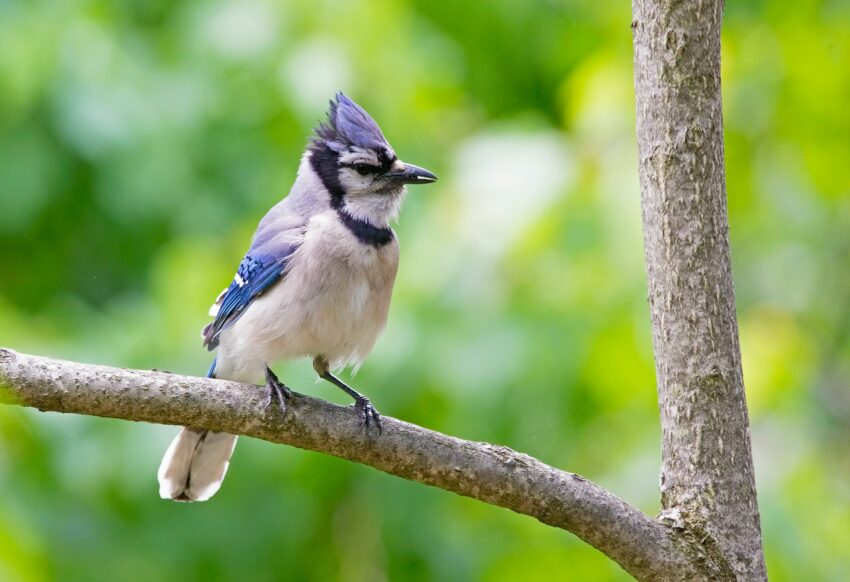
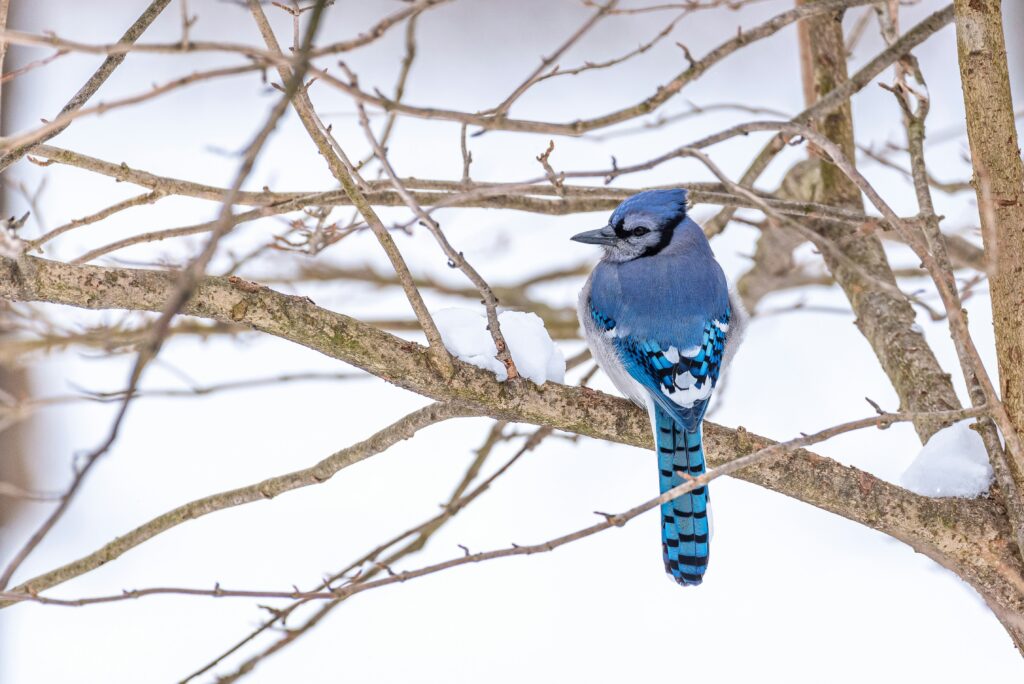
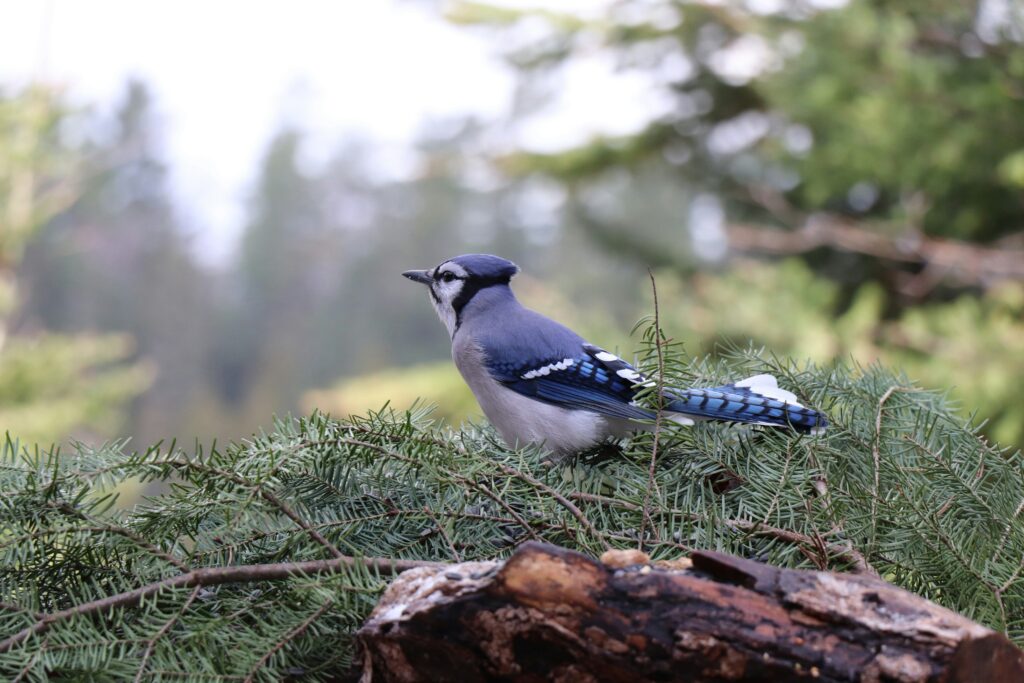
Distinctively blue and conspicuously loud, Blue Jays can be spotted easily in Nutley. These birds are identifiable by their rich blue plumage, white underside, distinctive crest, black face-frame, wing and tail barring, and white wing and tail markings. They can be found moving between trees, gardens, shrubs, town parks, and on human-made structures like fences and power lines. Blue Jays sing by shouting “jay! jay!” or ringing squeaky calls.
Adult Blue Jays are about 9.8–11.8 inches long, weighing roughly 2.5-3.5 ounces, and also possess an impressive 13.4–16.9 inch wingspan. The sexes look alike, although males are slightly larger.
Blue Jay feathers don’t actually contain blue pigment and actually contain the brown pigment melanin. Their blue appearance comes from microscopic structures in the feathers that scatter light in a way that makes our eyes perceive blue. These nano-structures scatter and reflect blue light wavelengths while melanin absorbs the rest.
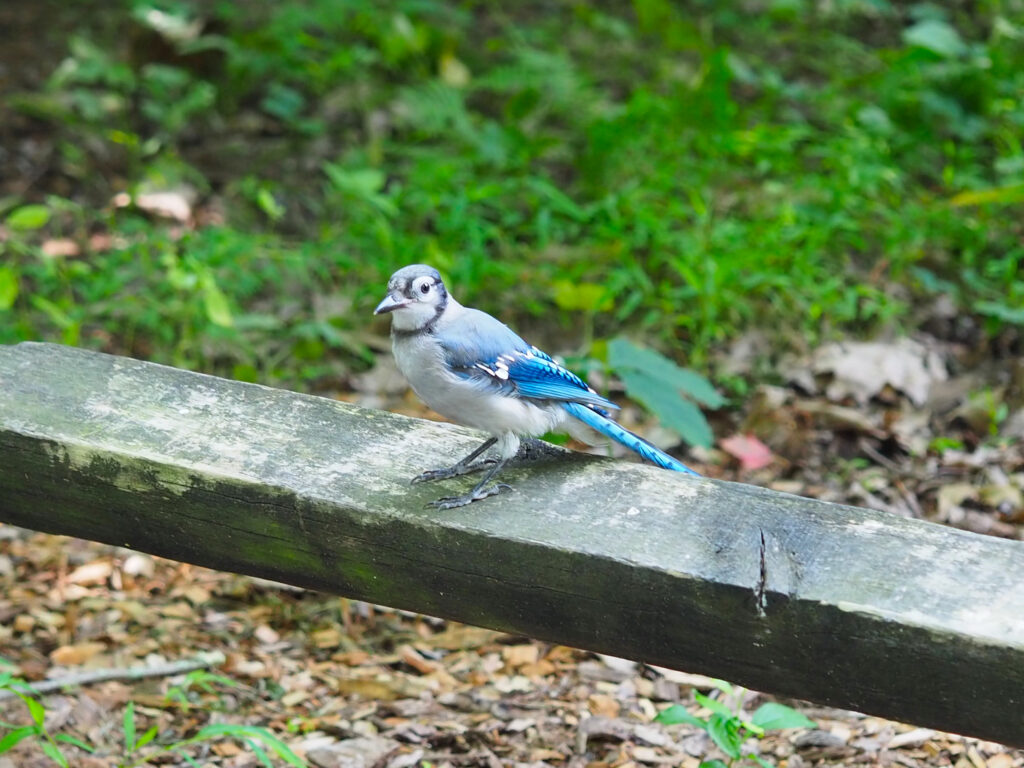
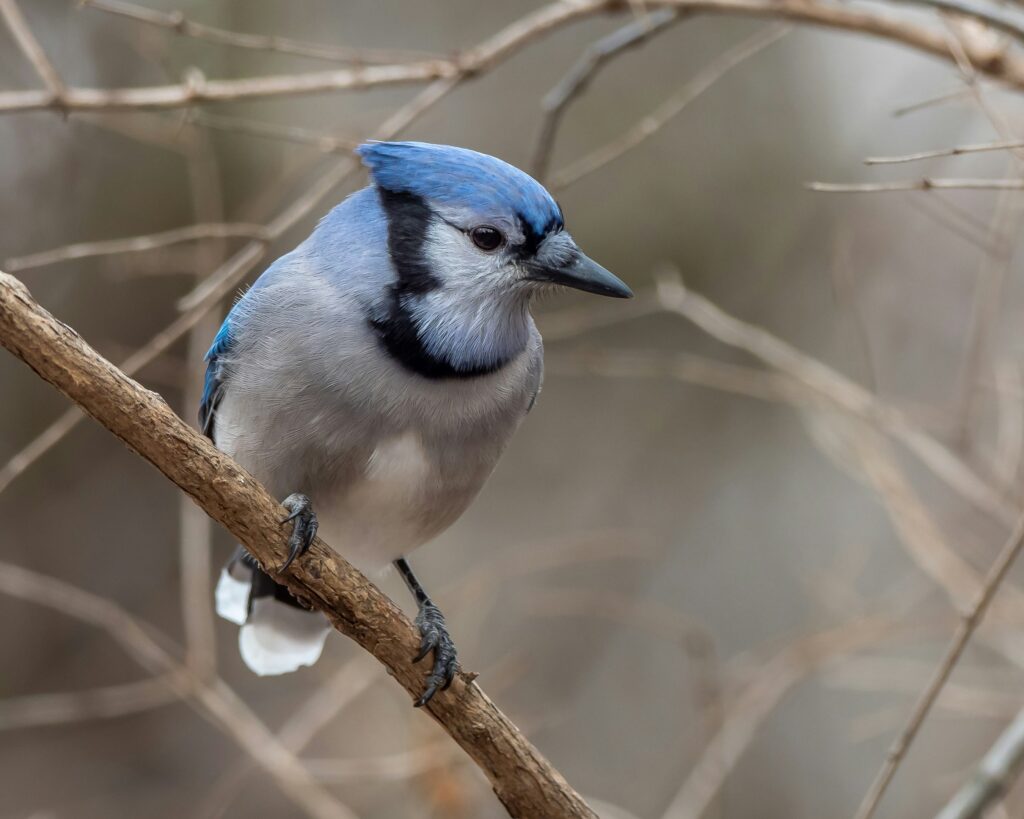
A Blue Jay’s characteristic crest can be raised and lowered based on their moods and comfort level. They can be observed lowered when they’re relaxed, peacefully feeding, and when caring for nestlings, or raised when alert and warning of potential danger with shouting calls.
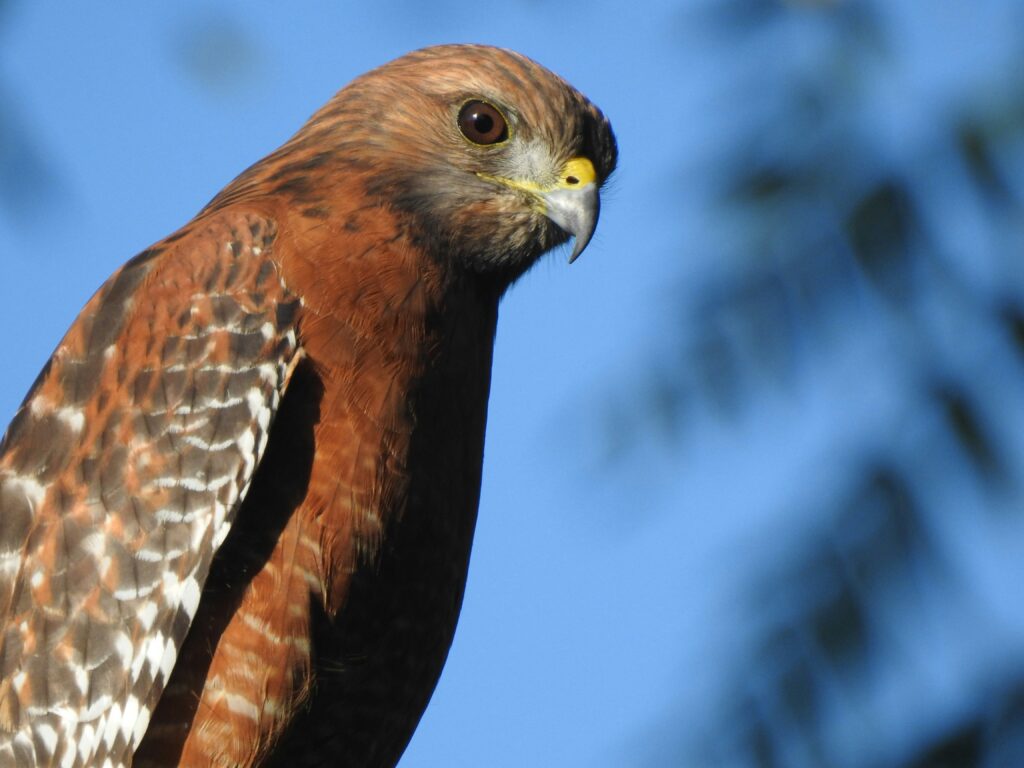
Blue Jays frequently imitate hawk calls, particularly Red-shouldered Hawks. These calls may warn other jays that a hawk is nearby, but Blue Jays have also been observed mimicking hawk calls while at feeders, potentially to scatter other birds away while they get their grub on.
Blue Jays are familiar members of the Corvidae family and are related to crows, ravens, magpies, and other jays. Like other corvids, Blue Jays have complex social systems and form strong family bonds.
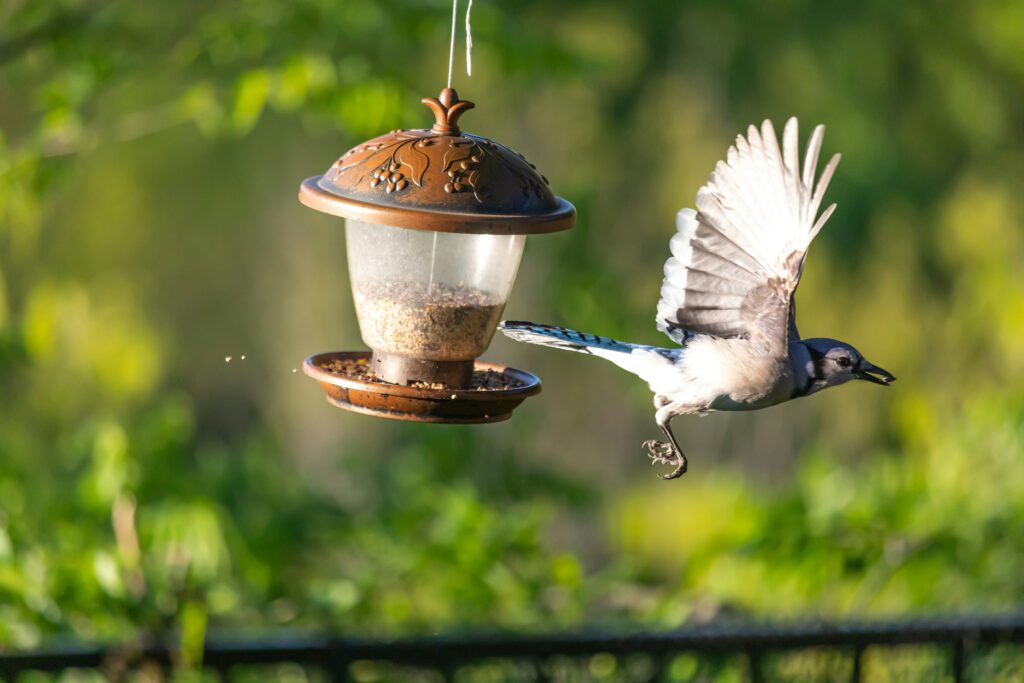
An intelligent and adaptable bird, Blue Jays can forage for a variety of foods such as insects, acorns, grains, and seeds. They may behave aggressively at bird feeders to other birds. While Blue Jays have a reputation for killing and eating other birds’ eggs and hatchlings, an examination of 530 Blue Jays only showed evidence in six birds of consuming eggs and nestlings.
Although most of Nutley’s Blue Jays are all-season residents, they can also be observed migrating in large flocks along the Northeast and Great Lakes region. Researchers haven’t yet found a definitive reason why some migrate and some don’t.
Despite being a highly visible color, Blue Jay nests aren’t very flashy. They construct their cup-shaped nests out of mostly twigs and grass, sometimes incorporating mud, and lined with rootlets. Both parents participate in building the nest, with males tending to gather the most material, and the female does most of the construction.
They usually build their nests at the outer branches of deciduous or coniferous trees, or between where two branches meet. The angle where two branches meet is also called a crotch, or branch union. Blue Jays typically build their nests about 10–25 feet high, although this range may sometimes be between 5–50 feet.
When Blue Jays lay eggs, their clutches may contain between 2–7 eggs. Their eggs can appear bluish or light brown with brownish spots, and can be between 1–1.3 inches long. Both adults incubate the eggs for about 17–18 days, although females incubate the most. While females are incubating the eggs, the male brings her food. Being altricial birds, Blue Jay babies hatch with their eyes closed, with sparse downy feathers, and rely on their parents for food and warmth. They remain in the nest for about 17–21 days while both parents feed and protect the juveniles. When the juveniles become fledglings, they generally leave the nest together.
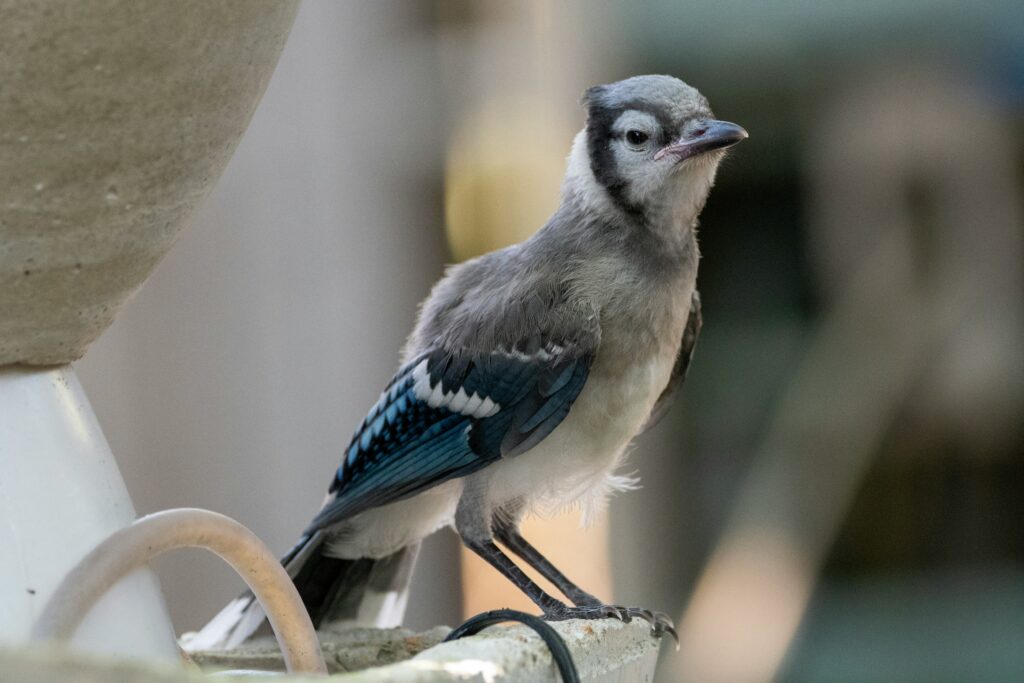
Juvenile Blue Jays aren’t as brightly colored as their bright blue parents and have duller colored plumage. Bird fledglings can appear like they’re abandoned, but their parents are likely nearby to help them grow.
Blue Jays can carry food in their throat and upper esophagus, also called the gular pouch. A jay may carry two to three acorns there, another in its mouth, and a cheeky acorn at the tip of the bill, an impressive five-piece acorn meal in one trip. They’re voracious acorn eaters, with one study showing that Blue Jays cached 133,000 pin oak acorns. By transporting and burying enormous numbers of acorns, they aren’t able to recover each one, and their leftover caches become oak trees.
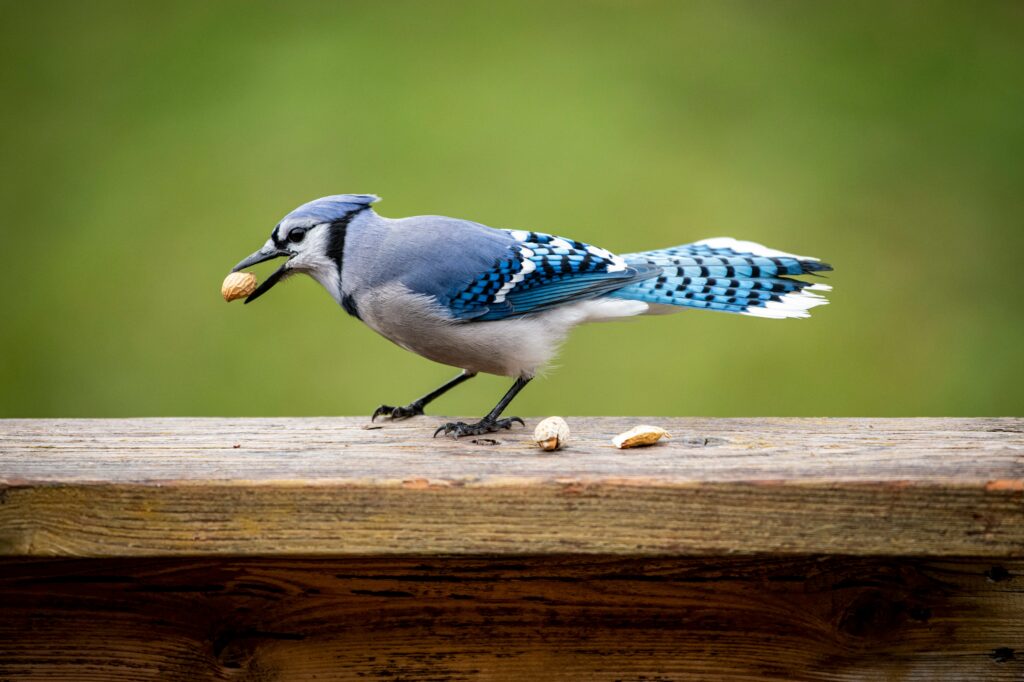
Blue Jays can transport heavy acorns several miles, with the average being about 0.7 miles, and some transported as far as 1.2 miles. They helped contribute to the spread of nut-bearing trees northward as the climate warmed at the end of the last glacial period. Some of the oak tree forests in eastern North America may partly owe their existence to generations of Blue Jays who forgot where they left their snacks.
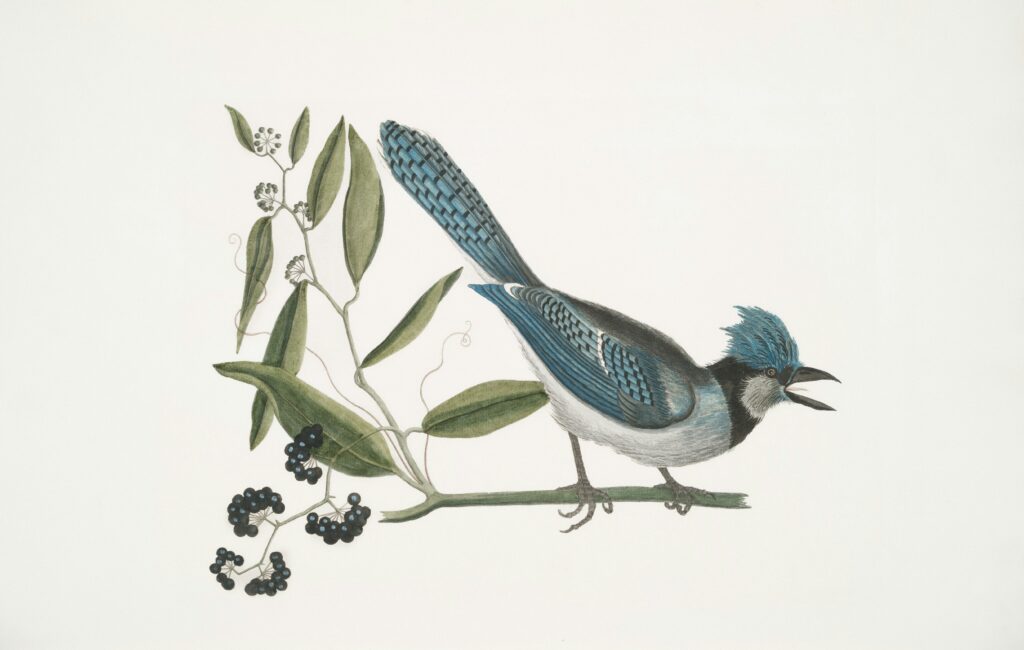
The oldest known wild and banded Blue Jay lived to at least 26 years and 11 months old. This jay was banded in 1989 and was later encountered again in 2016. While this is a single example of a wild Blue Jay’s lifespan, living to nearly 27 years as a wild songbird is impressive.
Species name: Cyanocitta cristata
Source: Audubon Society, Cornell Lab of Ornithology, National Library of Medicine, Journal of Biogeography, The Condor: Ornithological Applications
Photo credit: Mathew Schwartz on Unsplash