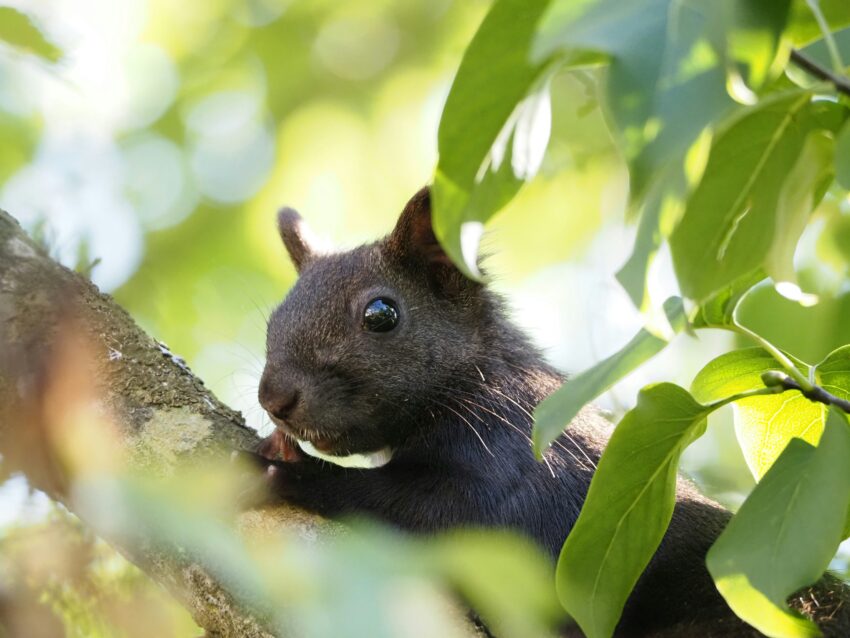
While spending recreation time in the Mud Hole with Nutley’s local wildlife, you may notice that not all Eastern Gray Squirrels are true to their name. Some of the squirrels are instead black, although they are still the same species. Maybe you’re curious about what makes these squirrels uniquely colored. Put on your Nutley Raiders thinking cap and get ready for a Nutley Nature News science lesson.
For Nutley students, these black squirrels offer an up close example of how genetics can influence an animal’s appearance. Their black fur is due to a genetic quirk called melanism, a natural color variation that produces extra dark pigment. The pigment, called eumelanin, can make a squirrel’s fur appear brown-black or jet black rather than the usual gray. They are “morphs” of the same animal but with different coat colors, and are the same species as Eastern Gray Squirrels.
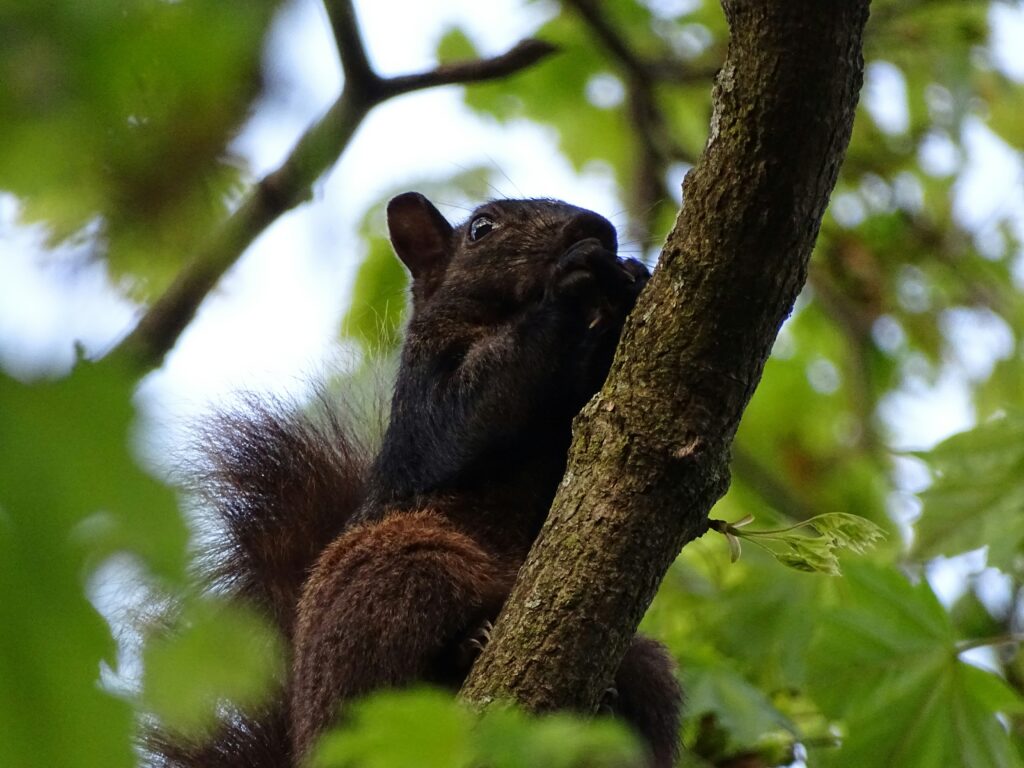
Black squirrels haven’t always been city-dwelling curiosities as they are today. A 2026 study found that centuries of deforestation, hunting, and human relocation of squirrels helped reshape where melanistic Eastern Gray Squirrels are found today.
One possible benefit from having black coats is they may effectively tolerate cold weather better. Research suggests melanistic Eastern Gray Squirrels may have an advantage in cold weather, losing less heat and may have a greater ability to produce heat without shivering in very cold conditions.
One study shows that in 43 North American cities and more than 60,000 squirrel observations, researchers found that melanism was generally more common in highly urbanized areas, particularly where winters were colder, much like Nutley.
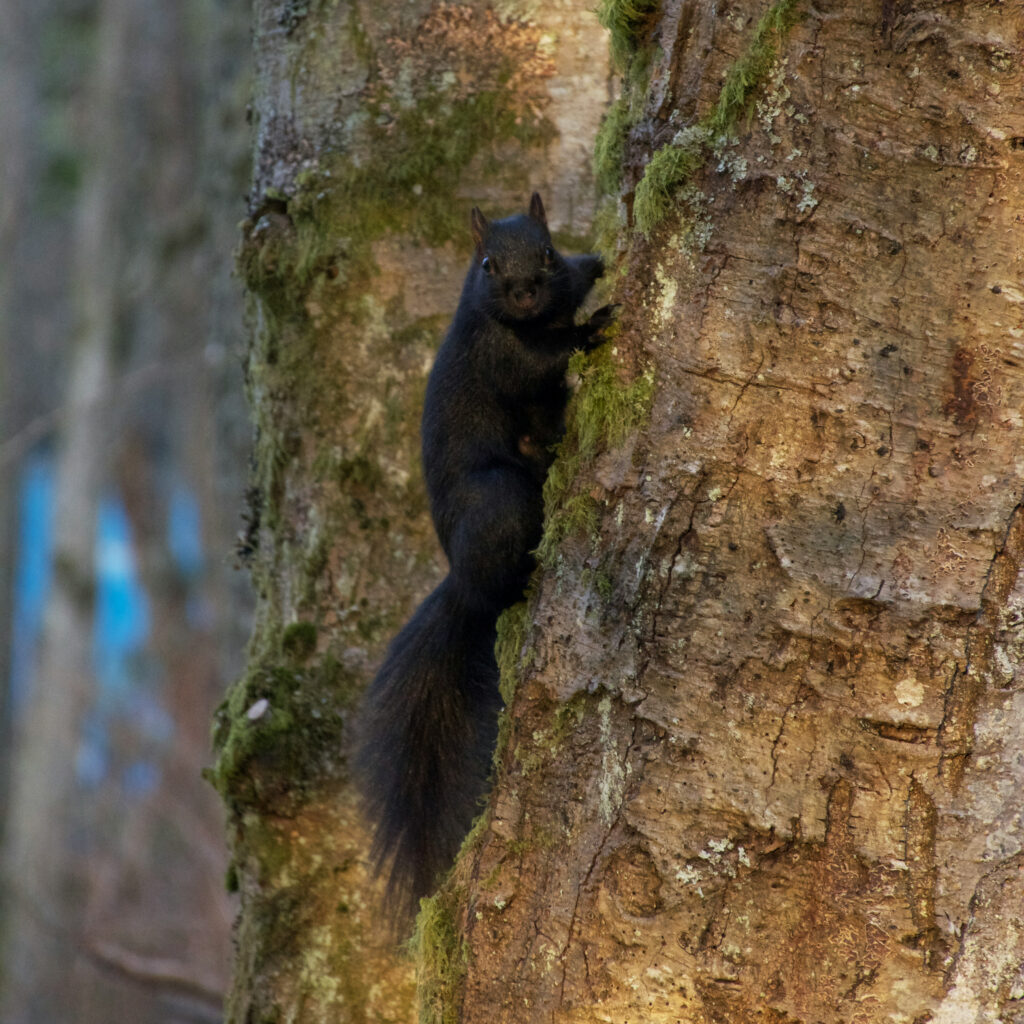
The science behind the squirrels’ black fur is more interesting than just their unusual color alone. Typical gray squirrels carry two copies of the typical MC1R allele, while jet black squirrels carry two copies of an altered allele linked to melanism, or dark pigmentation. An allele is a version of a gene. An animal is homozygous if it has two matching versions and heterozygous if it has two different versions. Brown-black squirrels are heterozygous, carrying one of each allele and developing a coat color between gray and jet black.
Together, their genetics result in different coat color squirrels in Nutley as they share spaces with humans, birds, small mammals, and curious dogs sniffing for a closer look. The next time you spot a melanistic squirrel, you’ll know the curious case behind its color is officially closed.
Species name: Sciurus carolinensis
Sources: National Library of Medicine, New Jersey Department of Environmental Protection, Physiological Zoology, Journal of Mammalogy, Scientific Reports
Photo credit: Till Butzke on Unsplash