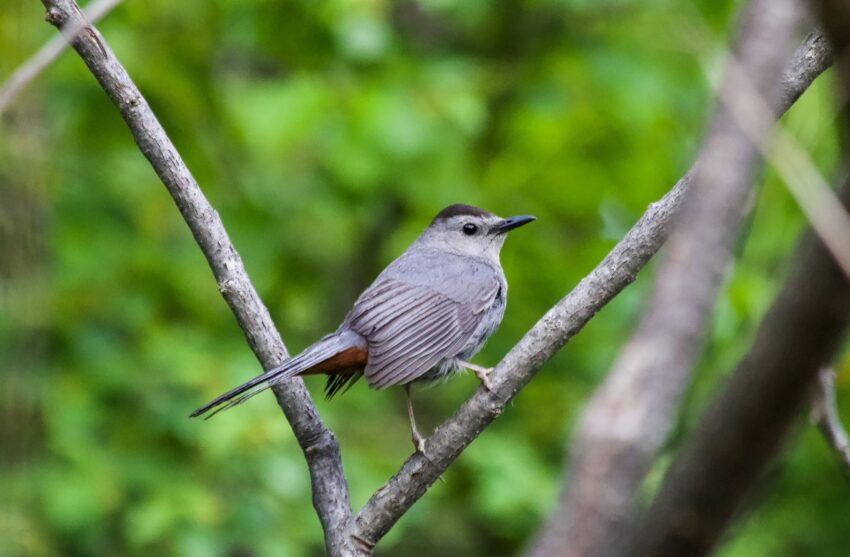
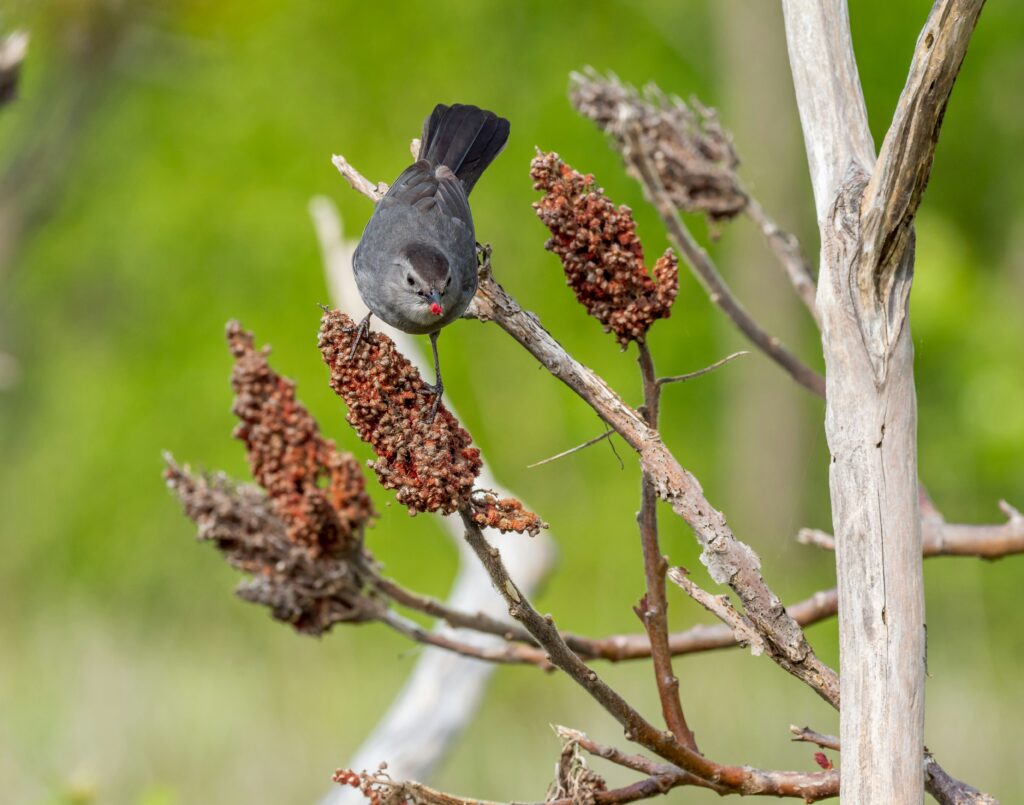
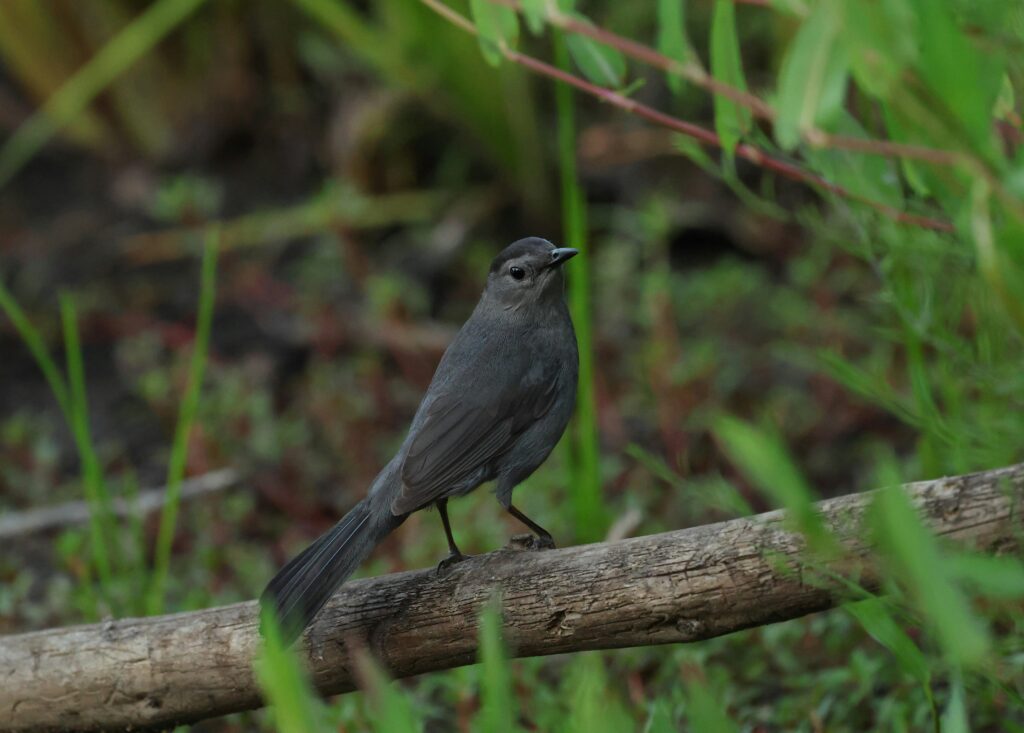
Sleek, chatty, and comparatively cat-like, Gray Catbirds are medium-sized songbirds with slate gray bodies, black cap, long black tail, and a rusty bottom patch. Males and females look alike, with no visible sexual dimorphism. As a North American native species, many migrate north to Nutley in spring to breed as summer visitors before heading south again in late summer, while some Gray Catbirds are all-season residents along the Atlantic Coast and don’t migrate.
Their habitats can be many places in Nutley, such as the town parks, shrubs, forest edges, and even back yards.
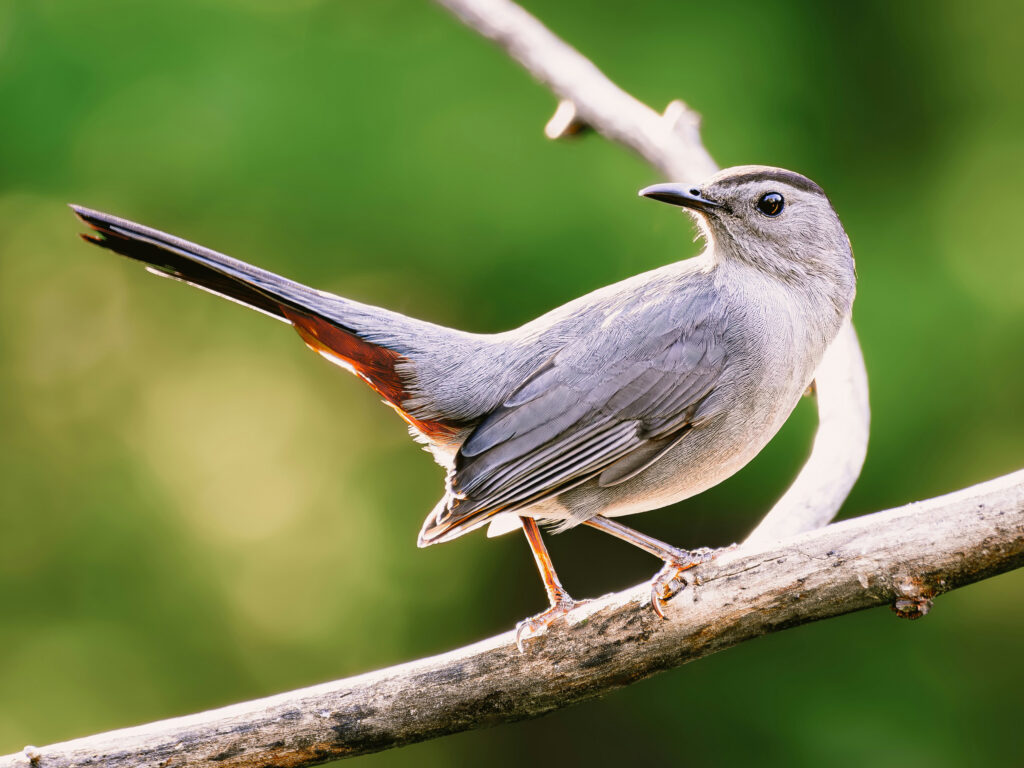
Their calls are a raspy, catlike “mew!”, while their song is a long, jumbled mix of whistles, gurgles, and mechanical notes. They can borrow phrases from other bird species’ songs. Gray Catbirds are related to mockingbirds in the family Mimidae, and also possess the impressive mimicry that their cousins are well known for.
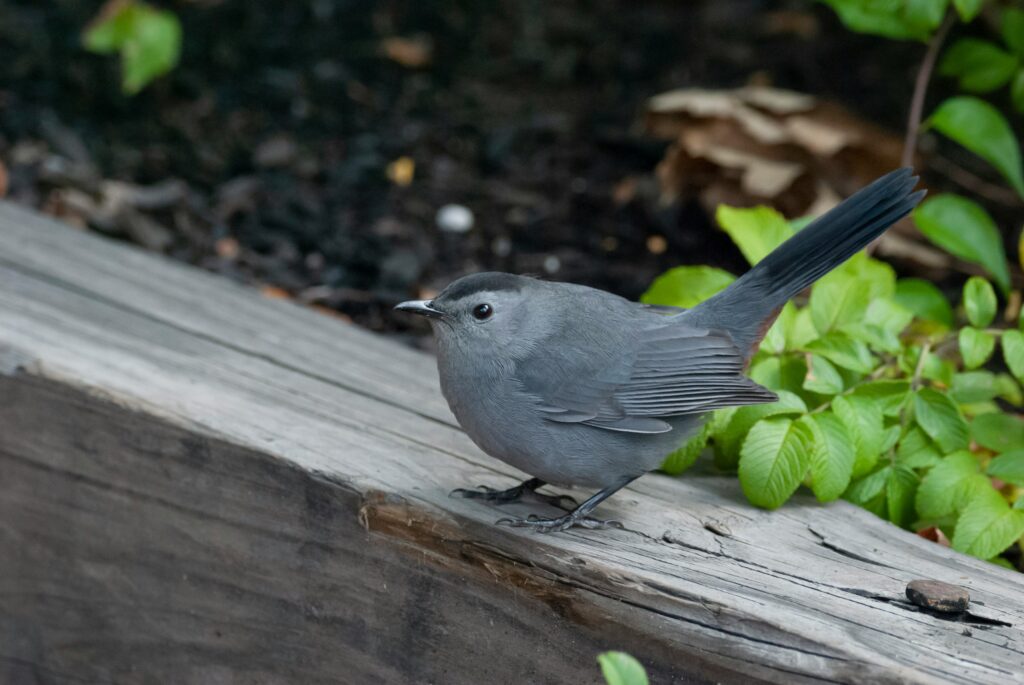
Gray Catbird songs can be quite long and may last as much as 10 minutes. Males use their loud songs to mark their territory, but they sing softer when they’re near the nest. Male Gray Catbirds court females by chasing them, posturing, and bowing with their wings drooped and raised tails. Females may sing a quiet song back to the male in response.
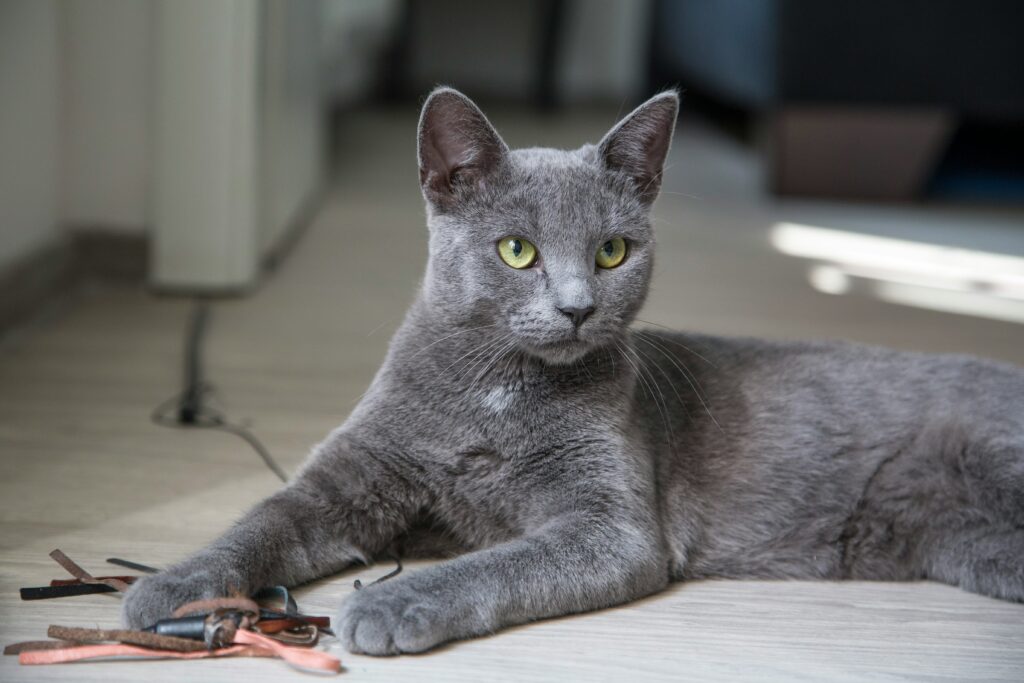
Much like their very distant mammalian “relative” Felis catus, Gray Catbirds will come to investigate if you make a “pishing” sound when they are in the area.
Gray Catbirds forage for insects like ants, beetles, grasshoppers, caterpillars, moths, spiders, and millipedes. They will also feed on berries and other fruit if they’re available such as holly berries, elderberries, poison ivy, greenbrier, bay, and blackberries. They are sometimes meddlesome garden pests that can eat and damage fruit, so Nutley gardeners should be watchful of their raspberries, cherries, grapes, or strawberry plants. They forage on the ground, using their beaks to flip leaves over looking for tasty invertebrates to snack on, and pick berries in shrubs and trees.
While they’re not classic seed-feeder birds, they can be attracted to your yard by planting native fruiting plants such as dogwood, winterberry, and serviceberry.
When building a nest, females build bulky open cups, although males sometimes bring material. Their nests are usually hidden in dense shrubs, low trees, and thickets, and are often several feet above the ground. Their cup nests are made with twigs, straw, bark, mud, and sometimes human litter. They construct a softer lining made of grass, hair, rootlets, and pine needles. A finished nest may be roughly 5.5 inches across and 2 inches deep.
Gray Catbirds lay between 1–6 eggs per clutch with 2–3 broods per year, although clutches of four eggs and two broods are also possible. Their eggs are turquoise green, and sometimes have small red spots. The females incubate the eggs for about 12–15 days, while both parents feed the hatchlings. Gray Catbirds are altricial, which means they hatch with sparse dark down, eyes closed, and rely upon their parents for warmth and protection. They generally leave their nests 10–11 days after hatching.
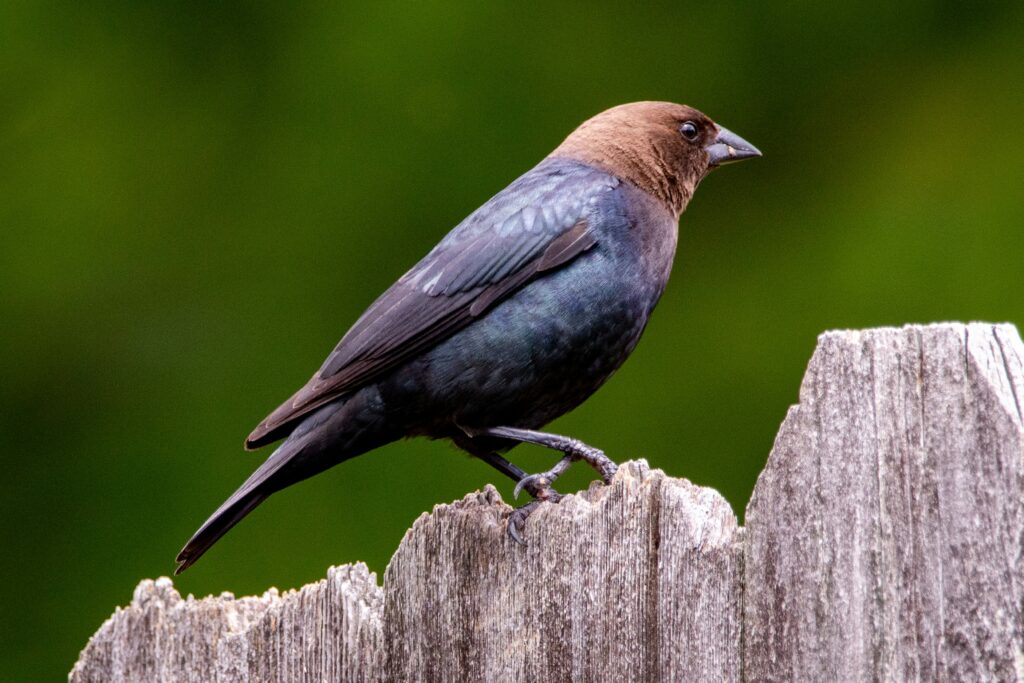
Brown-headed Cowbirds are a parasitic bird species and sometimes lay their eggs in catbird nests, but adult Gray Catbirds commonly identify, puncture, and eject the cowbird egg.
The oldest wild Gray Catbird was at least 17 years and 11 months old when it was recaptured and rereleased during banding operations in New Jersey in 2001, having been banded in Maryland in 1984.
Species name: Dumetella carolinensis
Sources: Audubon Society, Cornell Lab of Ornithology
Photo credit: Brian Yurasits on Unsplash