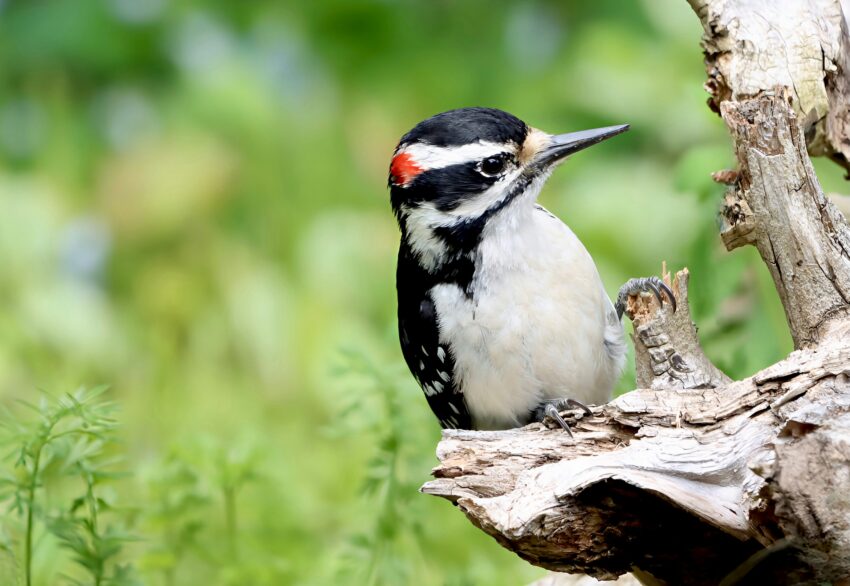
Small but mighty, the Downy Woodpecker is the smallest woodpecker in North America, measuring about 5–7 inches long, or roughly the same size as sparrows. They are all-seasons residents in Nutley, and their tiny size makes them especially versatile to living in parks, shade trees, and suburban yards.
They sport a crisp black and white suit with a white strike down the back, black wings dotted with white, and a striped face. Adult males sport a red beret-shaped patch on the back of the head. While they are similarly colored to the Hairy Woodpecker, their bills are short and stubby compared to its head.
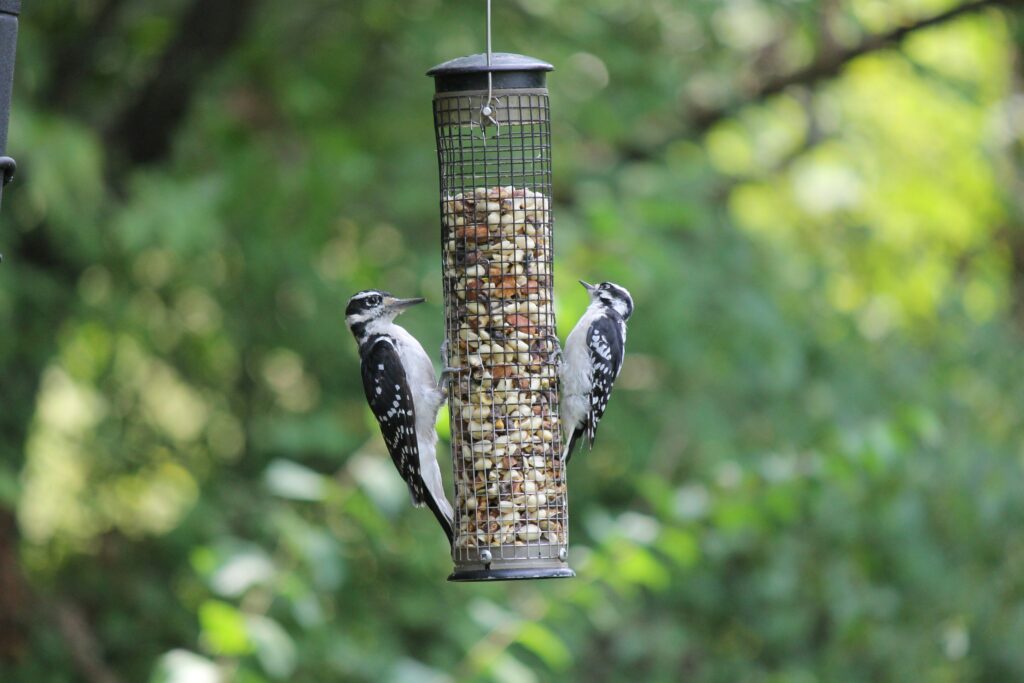
They comfortably forage for food on structures as small as weed stalks and as large as trees. They feast on insects, including unfavorable varieties such as corn earworm, tent caterpillars, bark beetles, and apple borers. Downy Woodpeckers frequently visit backyard feeders where they happily feast on suet and black-oil sunflower seeds. They may also snack on berries, acorns, and grains.
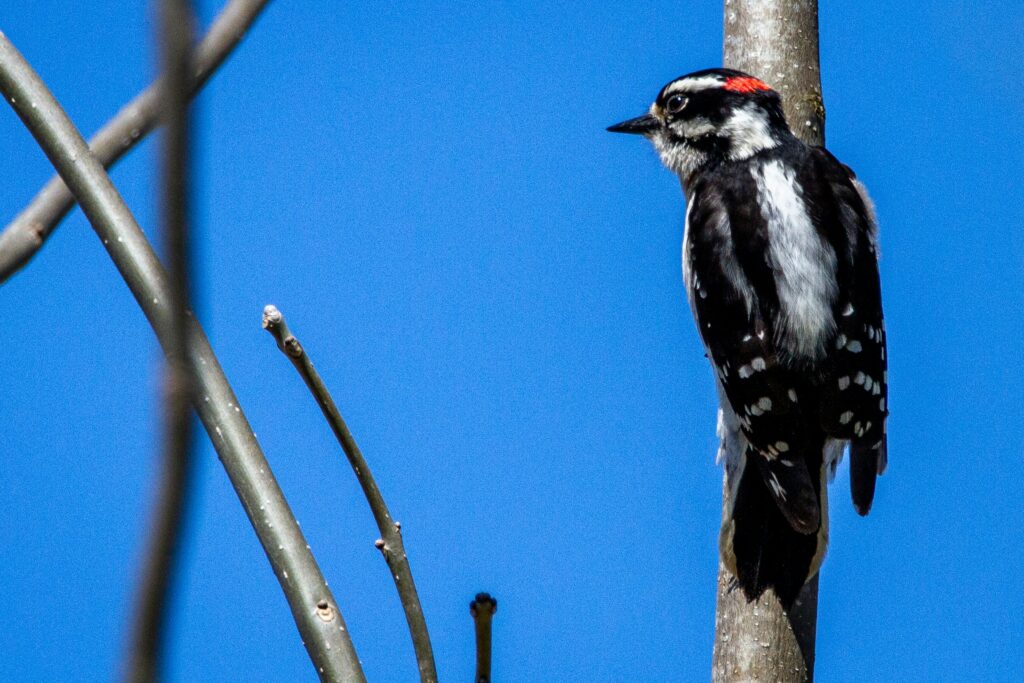
Downy Woodpecker calls are a quiet “pik” or a descending rattle. They don’t just use their impressive woodpecker abilities to find food — they also drum on dead resonant branches to communicate. When they’re in a dispute with another bird, they fan out their tails, raise their head feathers, and whip their beaks from side to side. Springtime brings courtship displays where males and females fly between trees with slow wingbeats like frolicking butterflies.
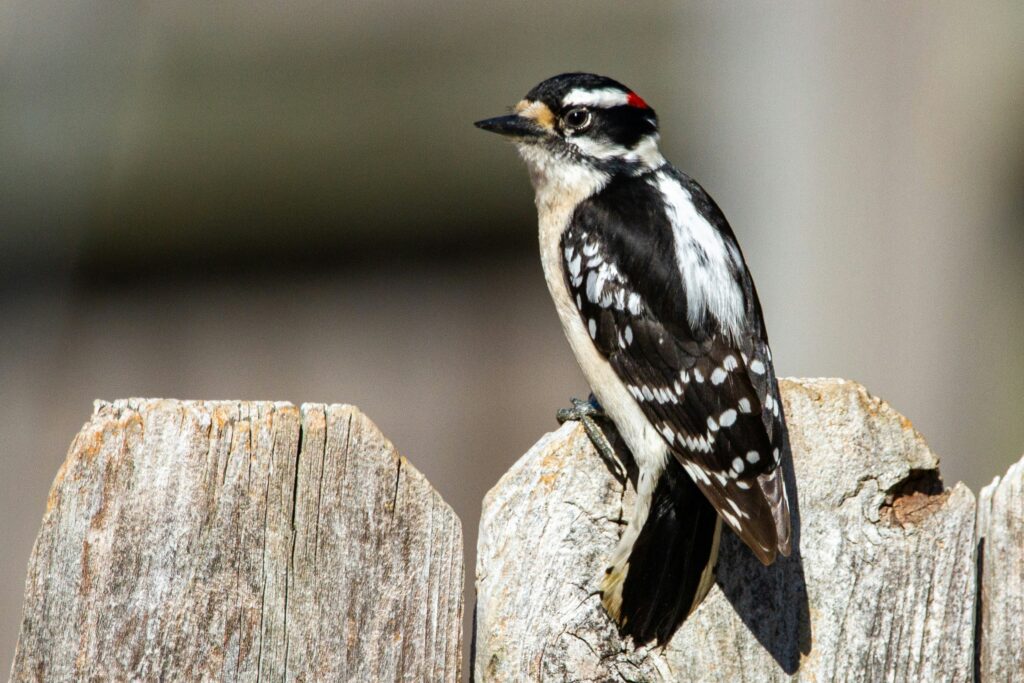
Downy Woodpeckers commonly nest in dead trees or dead parts of living trees. They also sometimes will nest along fences, and the transition from wooden to metal fences over the last century may have reduced their numbers. However, thinning and shrinking forests have had the opposite effect, as they thrive better in younger forests.
Both males and females excavate their nest cavity, which usually takes 1–3 weeks. They commonly make use of weakened, softer wood caused by fungi. They typically choose a wood stub about seven inches in diameter that leans away from the vertical, and place an entrance hole underneath.
These entrances are rounded and approximately 1–1.5 inches wide, with inner cavities 6–12 inches deep. The interior is the widest towards the bottom to accommodate enough space for eggs and incubating bird. Unlike other Nutley birds with ornate nest linings, Downy Woodpeckers line their nest cavity with simple wood chips.
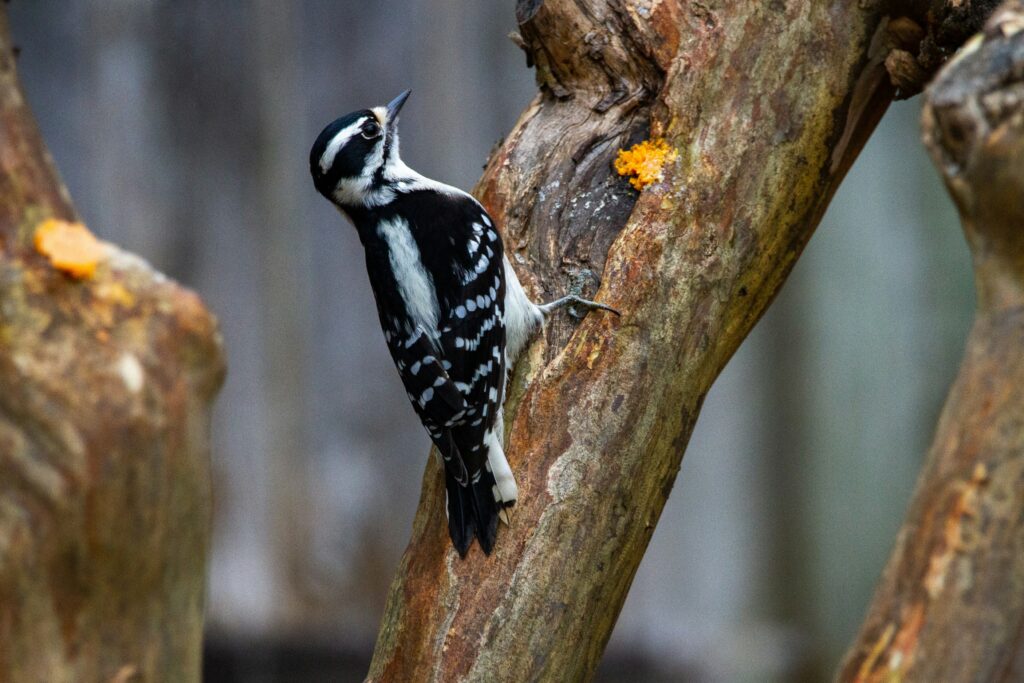
A typical clutch includes four or five plain white eggs, although they may lay between 3–8 eggs. Downy Woodpeckers are an altricial species, and their hatchlings are born with their eyes closed, naked, and relying upon their parents for warmth and protection.
Downy Woodpeckers may tag along with chickadees and nuthatches in mixed-species foraging flocks in the winter. They climb tree trunks or small branches in quick, energetic little hops. They also occasionally hop on the ground while foraging. Unlike other woodpeckers, they can meander sideways and even downward on trees.
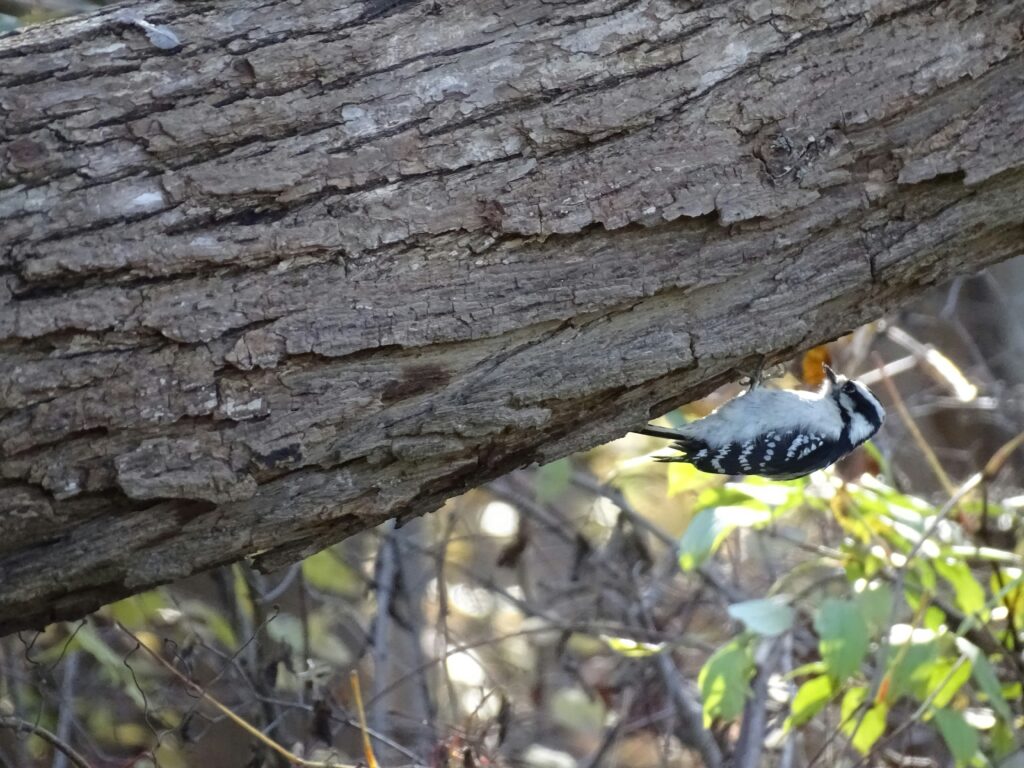
The oldest known wild Downy Woodpecker was a male banded in California in 1985. He was recaptured and subsequently released in 1996, making his age at least 11 years and 11 months old.
Species name: Dryobates pubescens
Sources: Audubon Society, Cornell Lab of Ornithology
Photo credit: Joshua J. Cotten on Unsplash