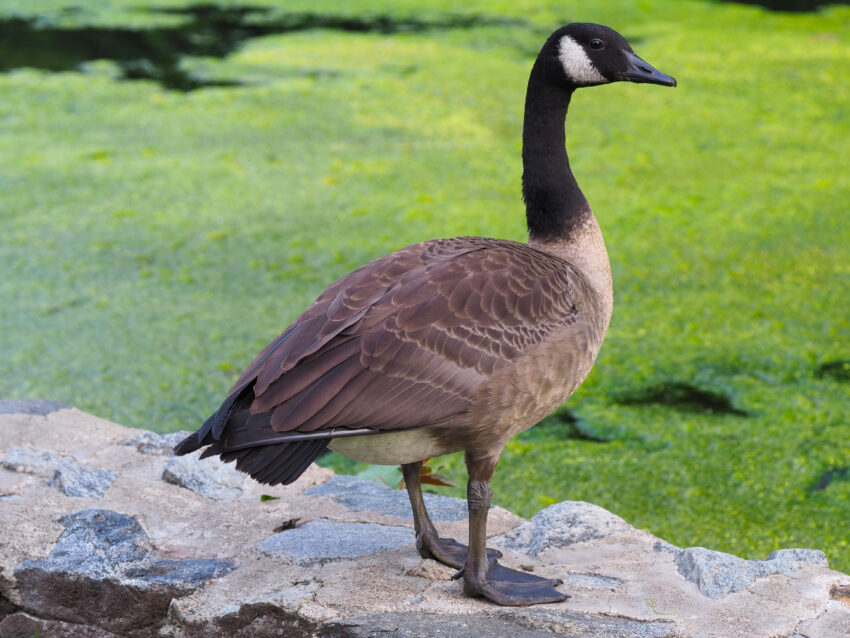
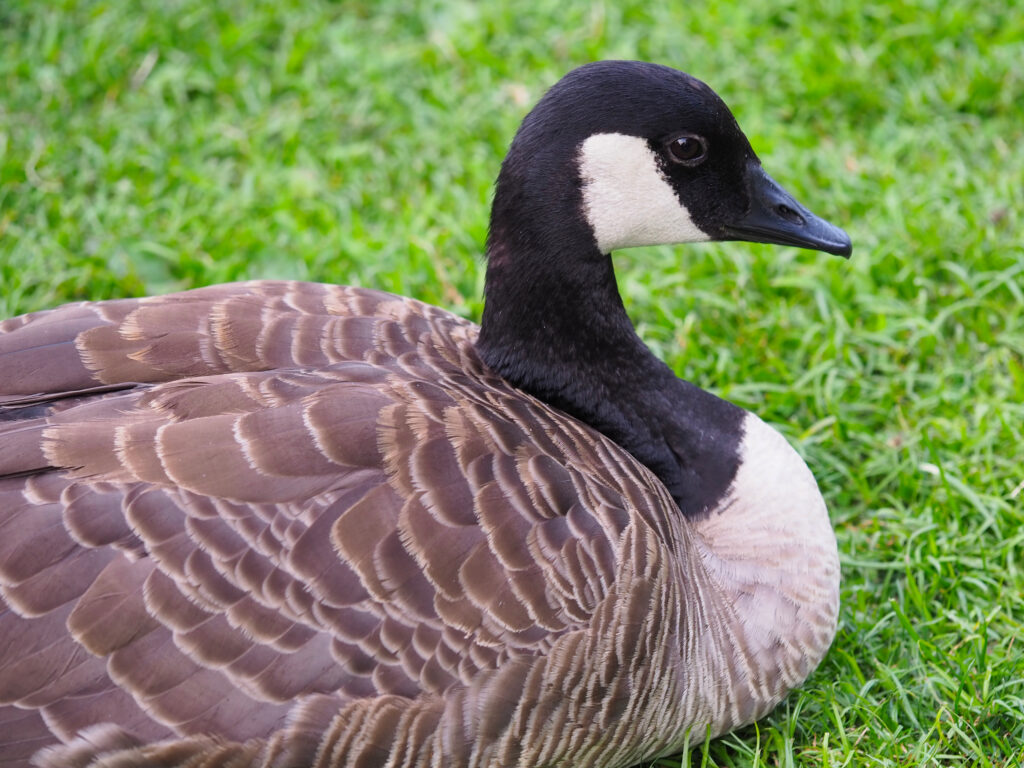
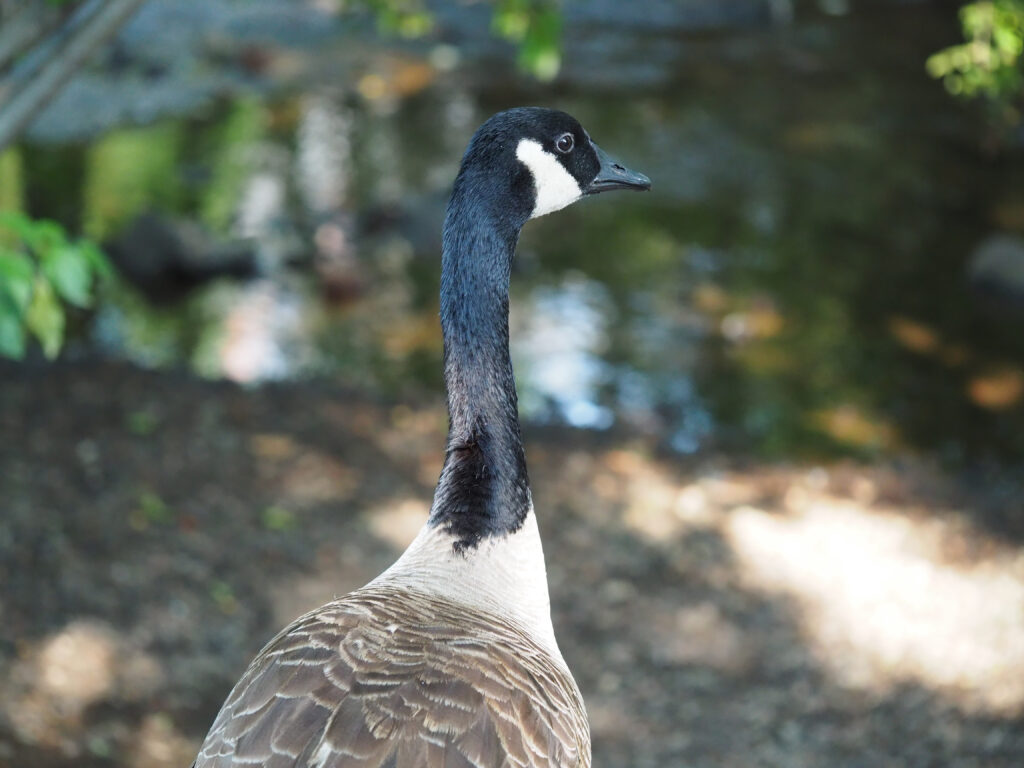
Canada Geese are large, long-necked waterfowl with brown body plumage, pale chests, black heads and necks, and white cheek patches. Their rumps and tails are black with a white patch underneath the tail. Males and females are visually indistinguishable with the same plumage, although males are slightly larger than females.
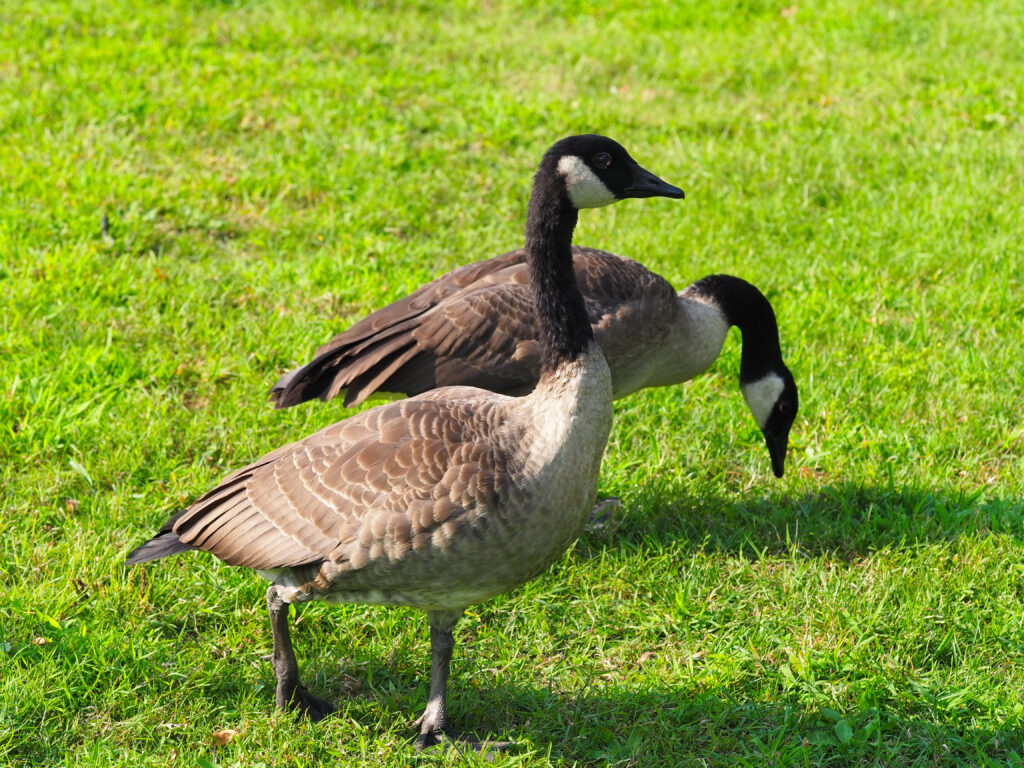
Their vocalizations are various honks, barks, and cackles, and sometimes hissing. Canada Geese honks can be loud and continuous, unlike songbirds such as American Robins or Gray Catbirds. They commonly hiss when they feel threatened or defensive. They also display warning behavior such as forward head pumping, raised tongues, vibrating neck feathers, and additional honking.
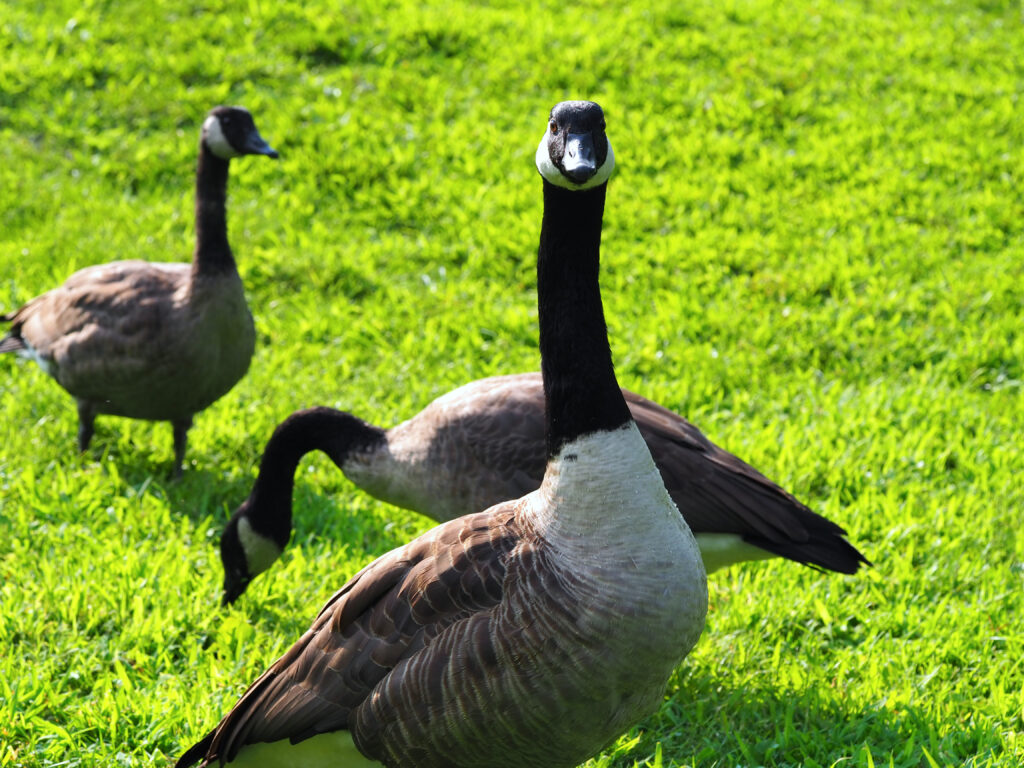
While native to North America and well known for their seasonal migrations, they have a huge resident population in New Jersey. They are both summer visitors and all-season residents as members of the Atlantic Flyway Resident Population. Migratory Canada Geese also pass through or winter in New Jersey around October through March. New Jersey’s primary migratory Canada Geese are in the Atlantic Population, which breed in Quebec, Canada and travel south into the Mid-Atlantic from the Northeast during the non-breeding season. Nutley’s Canada Geese may be your local wild neighbor rather than a tourist.
During the spring and summer, they feast on tasty lawn grass and sedges, which are grass-like plants with stems and flowers. They also dine on aquatic vegetation in shallow water such as eelgrass by dipping their heads and necks underwater. In the fall and winter, they trade their diet of fresh grasses for berries, seeds, and agricultural grains such as corn and wheat. They occasionally will snack on animals such as insects, mollusks, crustaceans, and small fish, although they prefer vegetarian main courses.
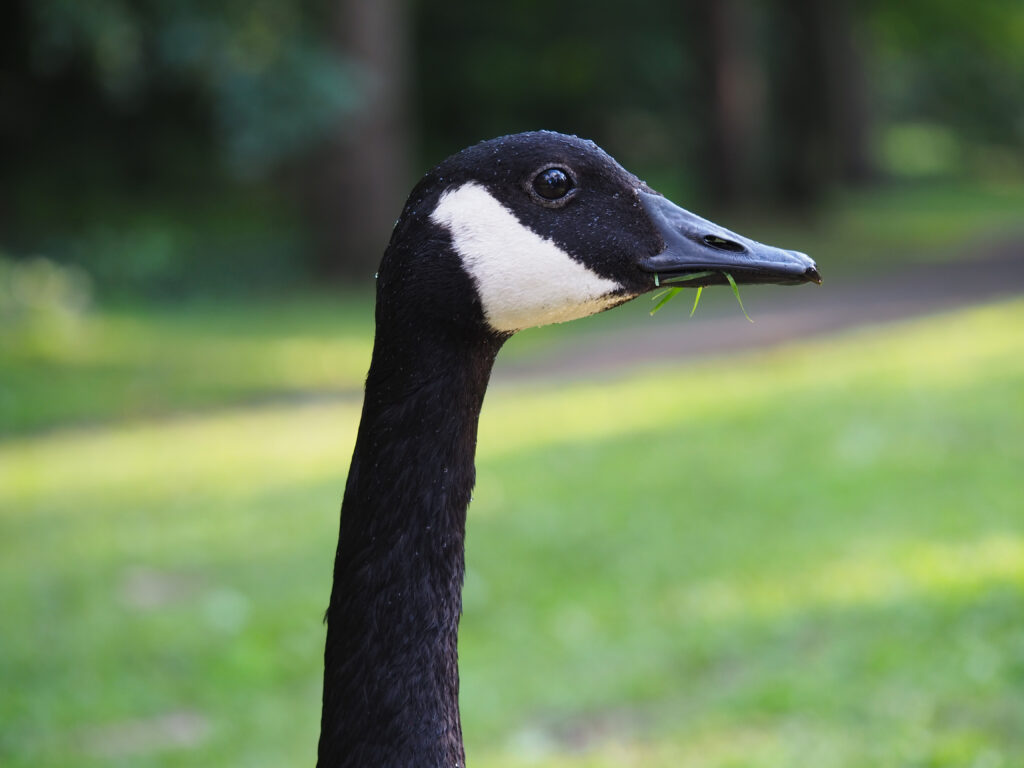
Canada Geese gain an advantage by foraging for grass on lawns, as short manicured lawns give adults and their juveniles an unobstructed view of approaching predators, as well as curious children and bicyclists moving too fast.
They typically don’t visit bird feeders, and scattering feed for wild birds is illegal in Nutley parks and township buildings. There’s a good reason why “Don’t feed the geese” signs are prominently placed in the Mud Hole. Feeding Canada Geese causes them to congregate, become more used to humans, and puts them into situations where they can be aggressive.
Other than situations that could put Canada Geese in a bad mood, such as getting too close to their nests and goslings, they can be quite docile. They just need their personal space to honk, eat grass, make a mess, and move on.
Canada Geese nests are usually on the ground near water, often on a slightly elevated area with good visibility, and usually within 100 feet of open water. These sites can include shorelines, peninsulas, or islands, but for Nutley residents they may be hard to find. They can also be adaptable in finding suitable nesting spots.
Their nests are quite large, shallow open cups constructed from grasses and other vegetation, which may include lichens, moss, and sticks. The female will line the nest with her own down and feathers as she lays her eggs. Their nests are typically 1.5 feet in diameter, although they can also reach as large as 3.3 feet. A typical clutch can contain 2–8 creamy-white eggs, although 4–7 eggs are considered typical in New Jersey, and they usually raise one brood per year. If a nest or eggs are destroyed, Canada Geese may rebuild and try again.
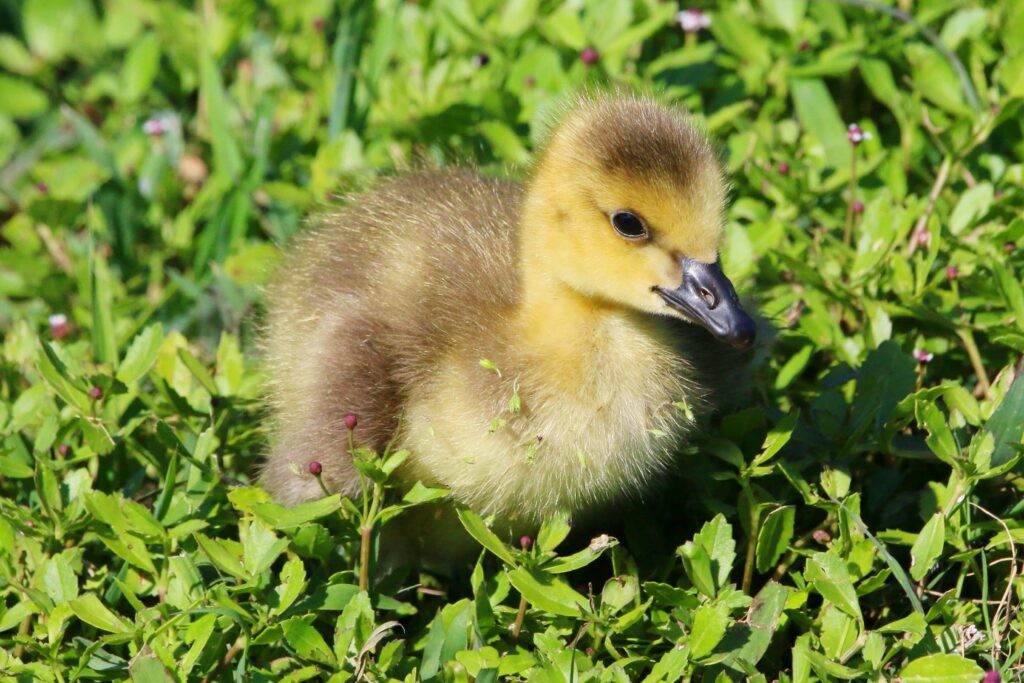
The male guards the nest while the female incubates the eggs for about 25–28 days, much longer than Nutley’s typical songbirds. Canada Geese juveniles are called goslings, and unlike their songbird neighbors are a precocial species, meaning they hatch already developed. Their babies hatch covered in yellowish fluffy down, eyes open, and can walk, swim, feed themselves, and even dive soon after hatching. Canada Geese goslings usually leave their nest 1–2 days after hatching.
Unlike precocial birds, songbirds are altricial and are born with their eyes closed, naked or with sparse down, and relying on their parents for warmth and protection for potentially weeks.
Goslings usually take their first flight around 7–9 weeks old. Their juvenile plumage shifts to their adult brown and white plumage after about 3–4 months. Although they look like adults, young geese are still very much juveniles, just wearing a trench coat.
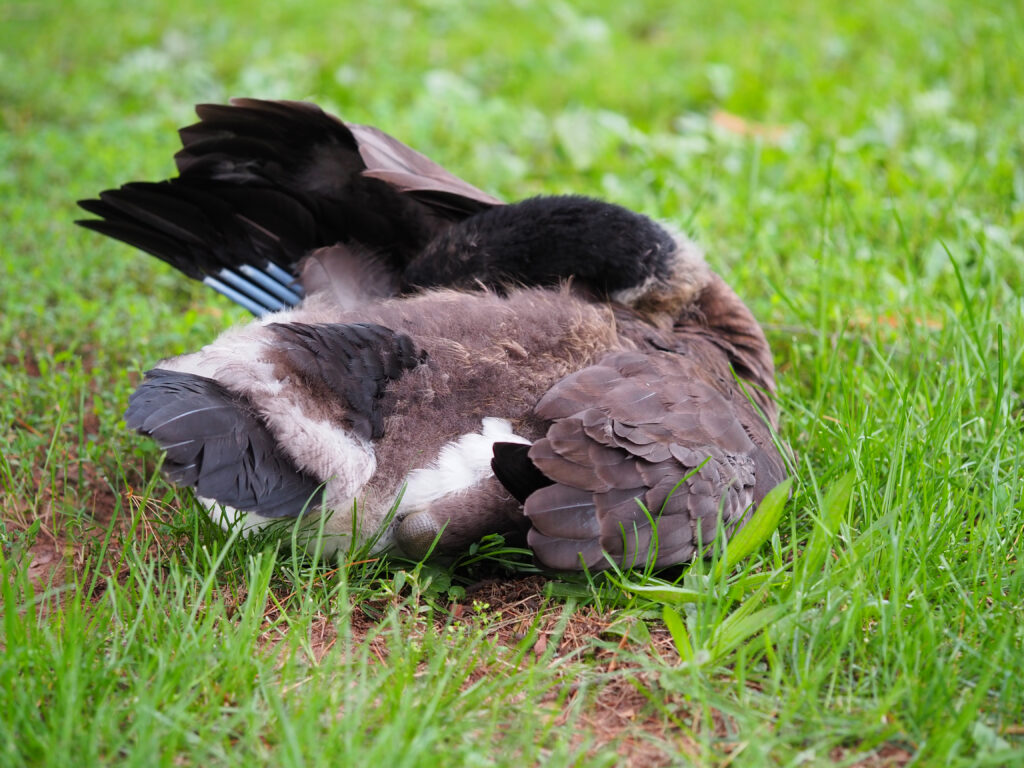
Canada Geese molt their feathers and completely replace their wing feathers around June and July, which leaves them temporarily unable to fly. These feathers are strewn around in the natural spaces they occupy, such as parks.
NJDEP manages a substantial resident population because large concentrations of Canada Geese can damage turf and crops, degrade water quality, and create aviation hazards, such as plane strikes.
The oldest recorded Canada Goose is a female that was at least 33 years and 3 months old when she was recaptured in Ontario in 2001, having been banded in Ohio in 1969.
Species name: Branta canadensis
Sources: Audubon Society, Cornell Lab of Ornithology, New Jersey Department of Environmental Protection, New Jersey Fish & Wildlife, Rutgers New Jersey Agricultural Experiment Station, Wildlife Biology, Environment and Climate Change Canada, Atlantic Flyway Council
Photo credit: Dani Lee Sepe on Unsplash