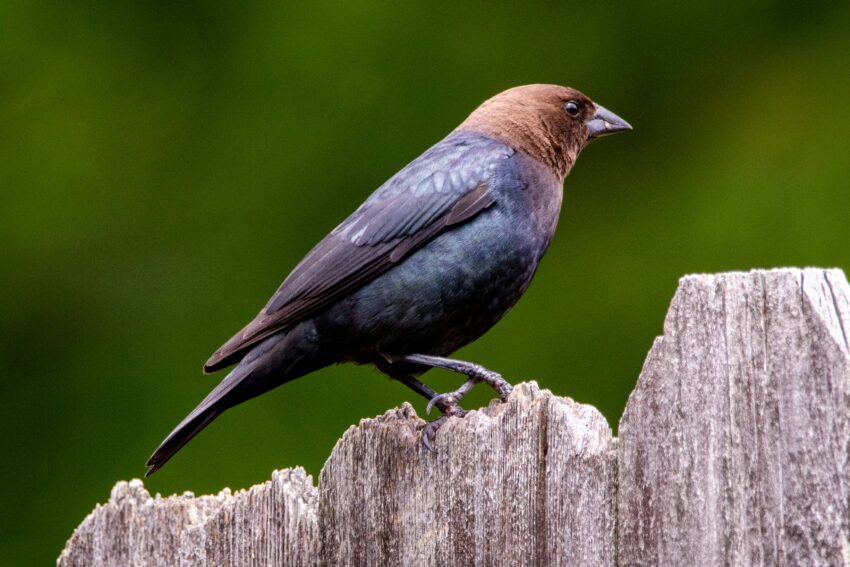
✔️ Brown-headed ❌ Cow ✔️ Bird
The Brown-headed Cowbird are stocky, short-tailed blackbirds with thick bills similar to finches. They are definitely birds and not cows, but they are true to their name in that they have rich brown heads. The sexes look different, as the females are plain gray-brown with paler plumage on their heads and finely-striped underparts.
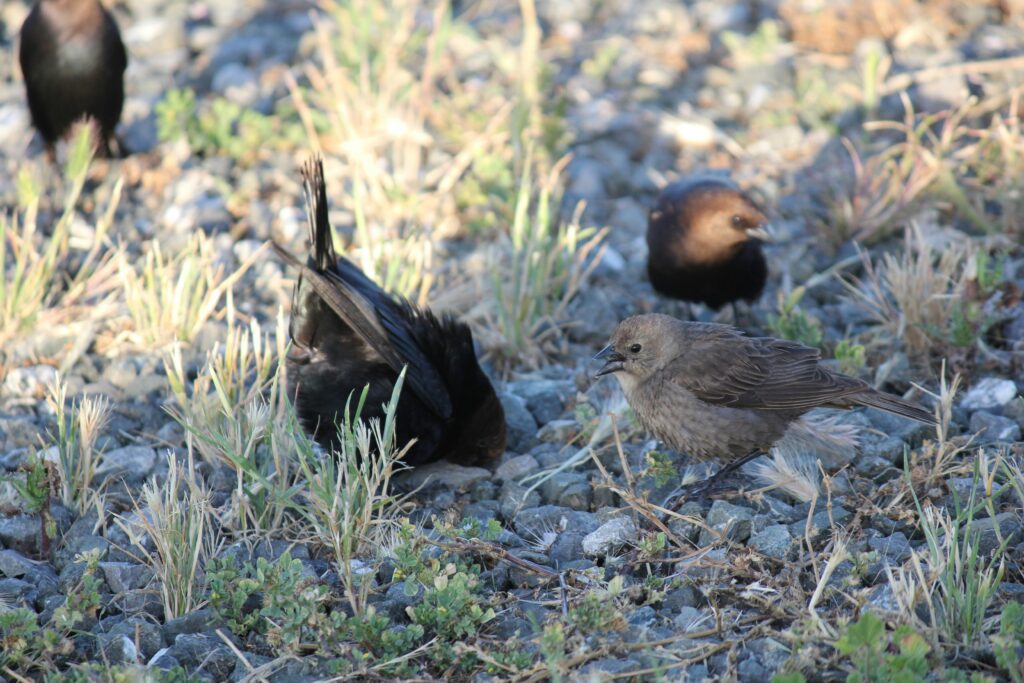
In Nutley, they are generally all-season residents, although some do migrate.
They can be spotted in many open habitats in Nutley, such as fields, parks, and forest edges. The males gather on lawns to put on a display for their mates, while females search for other birds’ nests.
Brown-headed Cowbirds are noisy singers, as the males sing with short, flowing gurgles and whistles, while the females make chattering calls.
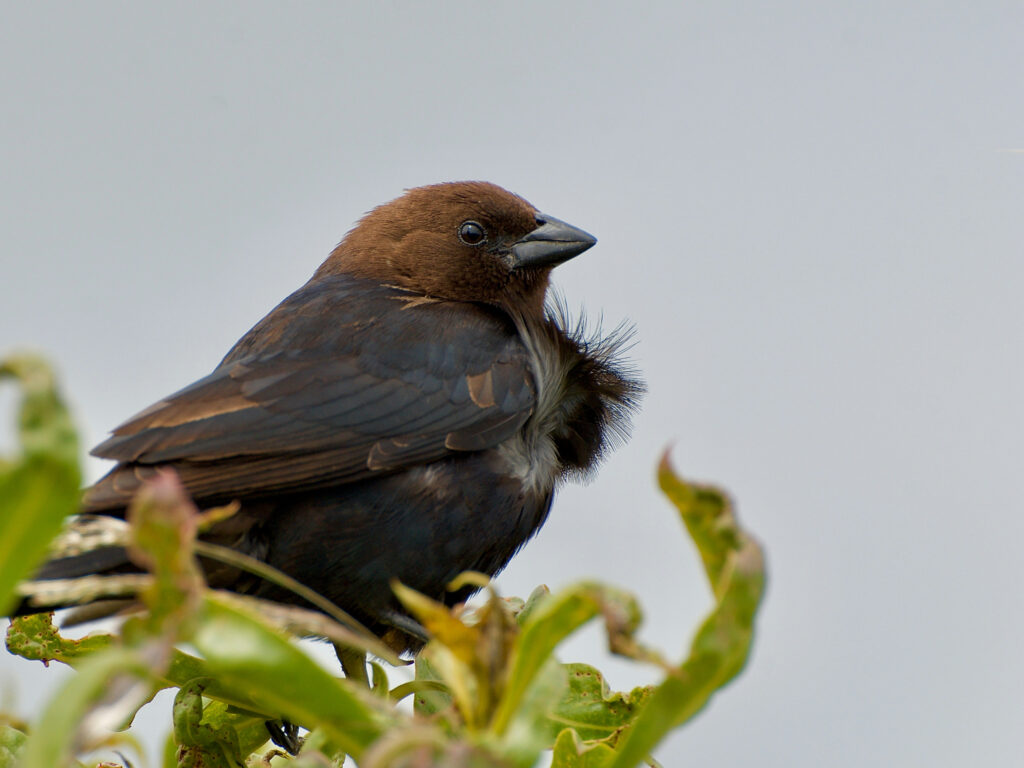
These birds mostly forage for grass and wheat seeds, in addition to crop grains. Their summer menu includes insects such as grasshoppers and beetles. They forage by walking and pecking at the ground, and can frequently be found in mixed flocks with blackbirds, grackles, and starlings.
The “cow” part of “cowbird” comes from their historical association with bison, although they’re currently associated with cattle and horses. Brown-headed Cowbirds developed an opportunistic strategy to eat the insects that cattle flush out from grass while they graze.
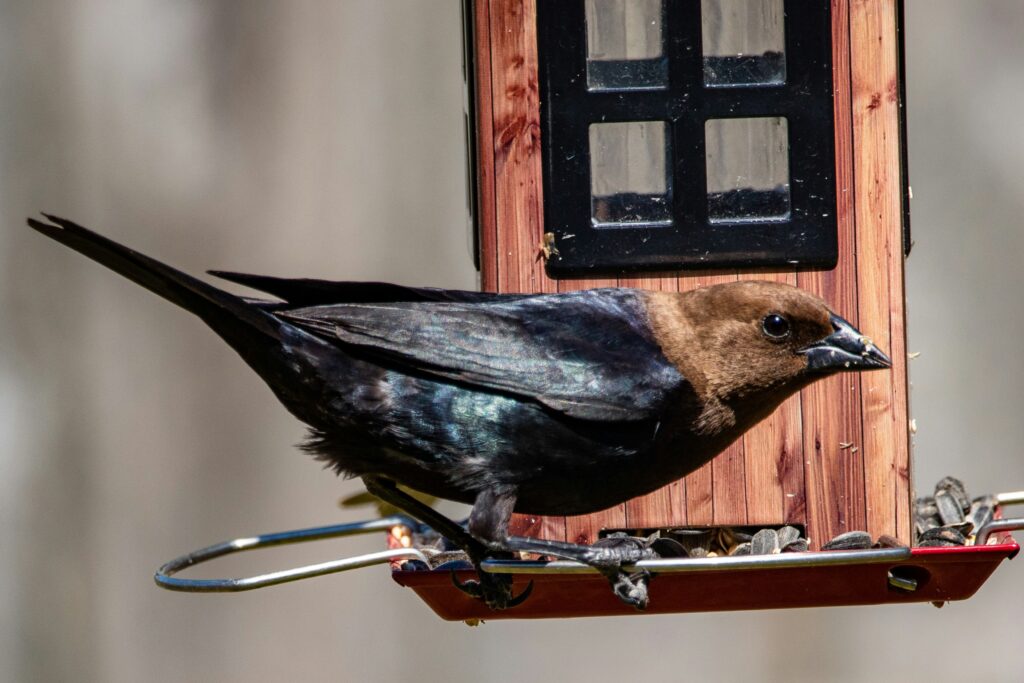
Brown-headed Cowbirds visit backyard feeders to feast on oats, milo, millet, and peanut hearts. They prefer to use large hopper, platform, and ground feeders rather than use aerial acrobatics.
These birds have a different breeding strategy than most birds. Brown-headed Cowbirds are “brood parasites”, where a female lays an egg into another bird’s nest. These birds don’t make their own nests, and females will select a host species nest in locations such as shrubs, treetops, marshes, ground, or cavities. Females may watch other birds for clues about their nest-building and will move through vegetation to shoo birds from their nests.
Their breeding season is roughly between May and June, although they may also breed outside of that range. The typical clutch comprises of 1–7 eggs, with females laying one egg per host nest. They may produce more than three dozen eggs in one summer.
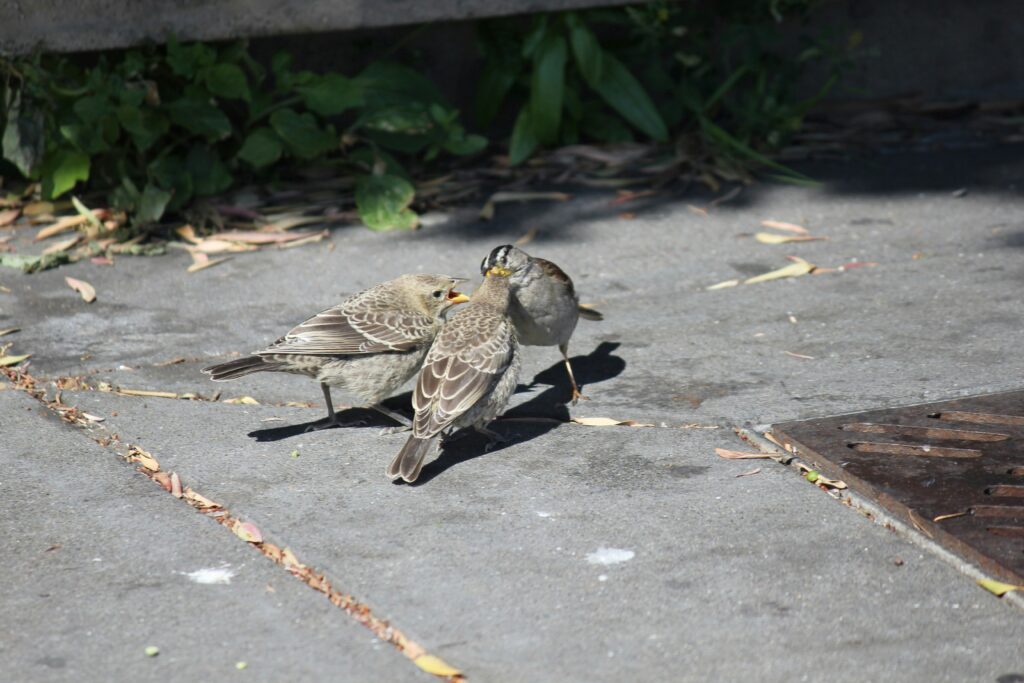
Brown-headed Cowbirds have been recorded laying eggs into the nests of more than 220 bird species, although more than 140 have been documented raising young cowbirds.
The oldest recorded Brown-headed Cowbird was at least 16 years 11 months old when he was recaptured and rereleased during banding operations in Wisconsin. While not unheard of, living to nearly 17 years old as a wild songbird is impressive.
Species name: Molothrus ater
Sources: Audubon Society, Cornell Lab of Ornithology
Photo credit: Joshua J. Cotten on Unsplash