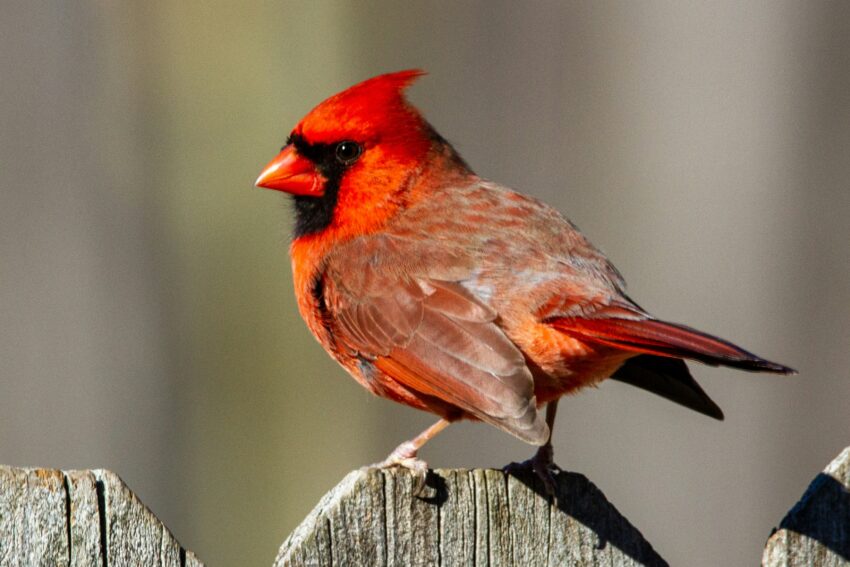
Abundant, bright red, and familiar, the Northern Cardinal is unmistakable in Nutley. With its striking red plumage, distinctive crest, and whistling song, they can be found in all areas of Nutley, including your own backyard. They can be spotted in a variety of locations in Nutley, including town parks, dense bushes, wooded areas, and suburban streets, and can commonly be seen perching in trees and on power poles.
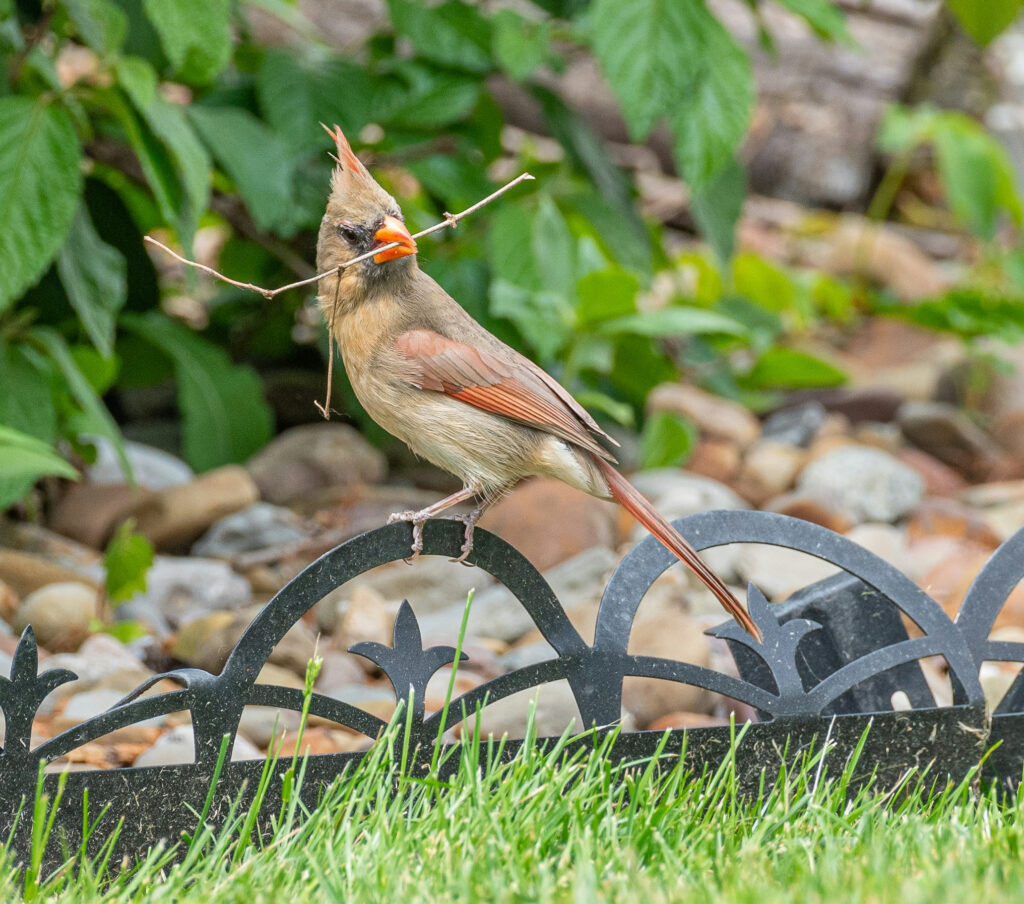
They are medium-sized songbirds that sing with a thick red-orange bill, while balancing with a long tail. Females are mostly pale brown with a black mask and a blush of warm reddish coloring on their wings, tail, and crest. Males are a vivid red with the same black mask around their bills.
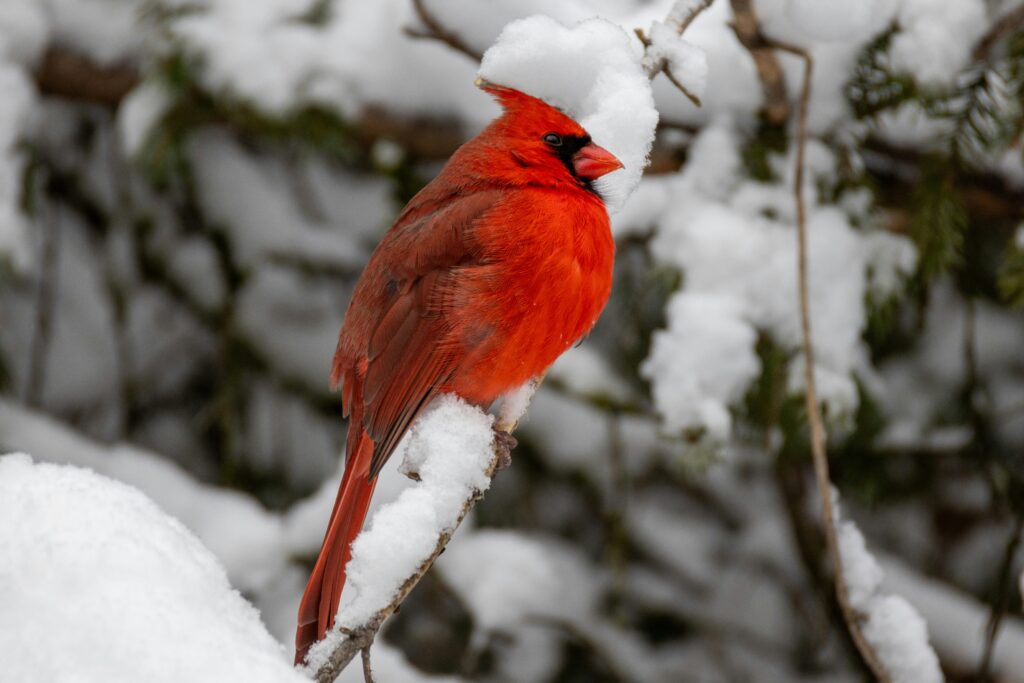
Both males and females sing, which is unusual for songbirds, and females may even sing while sitting on their nests. Female Northern Cardinals may sing to help communicate with the males about food delivery if they’re feeling snackish. Their songs sound like rich “what-cheer, cheer, cheer”, “purty-purty-purty-purty”, or “sweet-sweet-sweet-sweet”, while their call is a short metallic chirp.
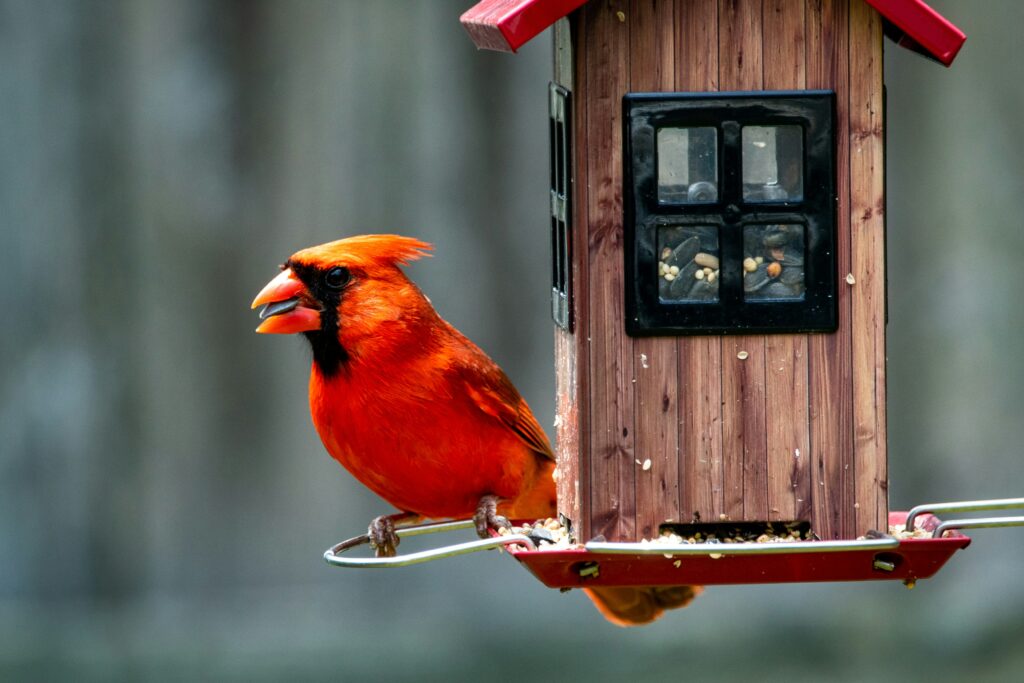
These birds are all-season residents and don’t migrate, and are a delightfully bright presence in a chilly winter landscape. They prefer thick, shrubby cover for their habitats such as at forest edges, hedgerows, overgrown fields, backyards, and marshy thickets. Cardinals frequently dine socially at bird feeders for seeds and fruit, while also supplementing their diets by foraging for insects. Insects are on the menu for their babies, as they don’t feed their hatchlings the seeds and fruits adults reach for. Their thick bills are perfectly suited to crunching on seeds, and forage close to the ground by hopping through low branches and shrubs.
Northern Cardinal females do most of the nest building, which are usually built tucked away into dense foliage. They can build their nests in shrubs, saplings, or vine tangles. Their finished nests are typically 2–3 inches tall and about 4 inches across, with an inside cup measuring nearly 3 inches wide. Females will build their nests in multiple layers, with the outer layer comprising of coarse twigs, leaf material, and bark. They line the interior of their nests with softer linings of grasses, stems, rootlets, or pine needles for a cozier cushioning for their eggs.
Females usually lay between 2–5 eggs per clutch, and their eggs are pale-gray, buffy, or greenish white, with a smattering of pale gray or brown speckles. They incubate their eggs for 11–13 days, and young cardinals remain in the nest for another 7–13 days after hatching. Cardinals are altricial birds, and their babies are hatched helpless, with closed eyes, diffuse down feathers, and requiring their parents to provide warmth and protection. Juvenile Northern Cardinals appear similarly to adult females with dilute colored brown and reddish plumage, but juveniles can be recognized by their dark gray or black beaks.
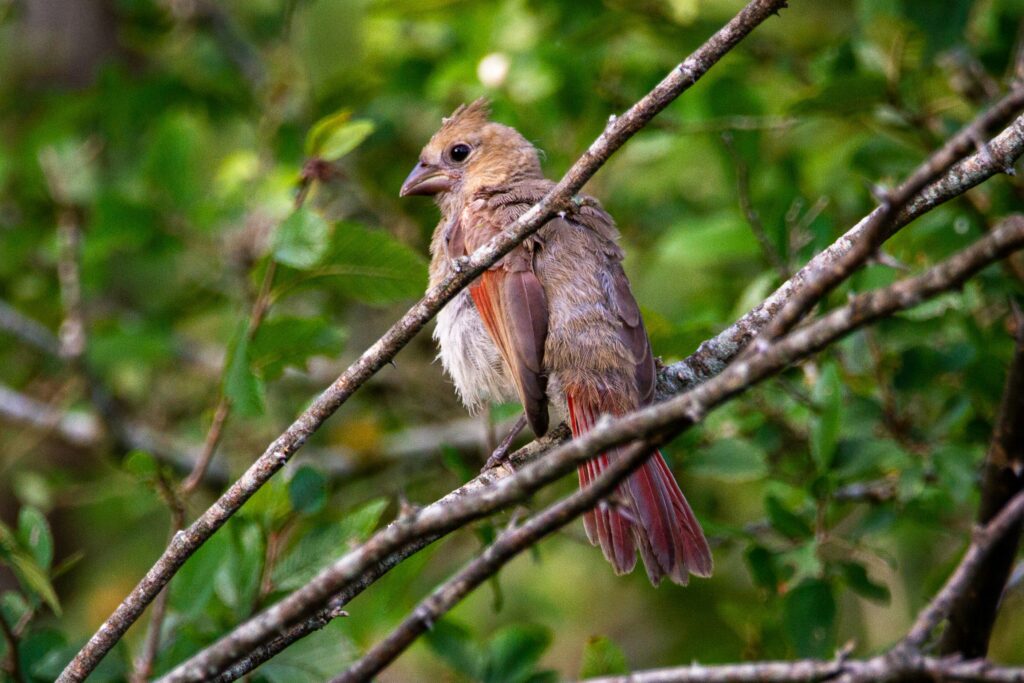
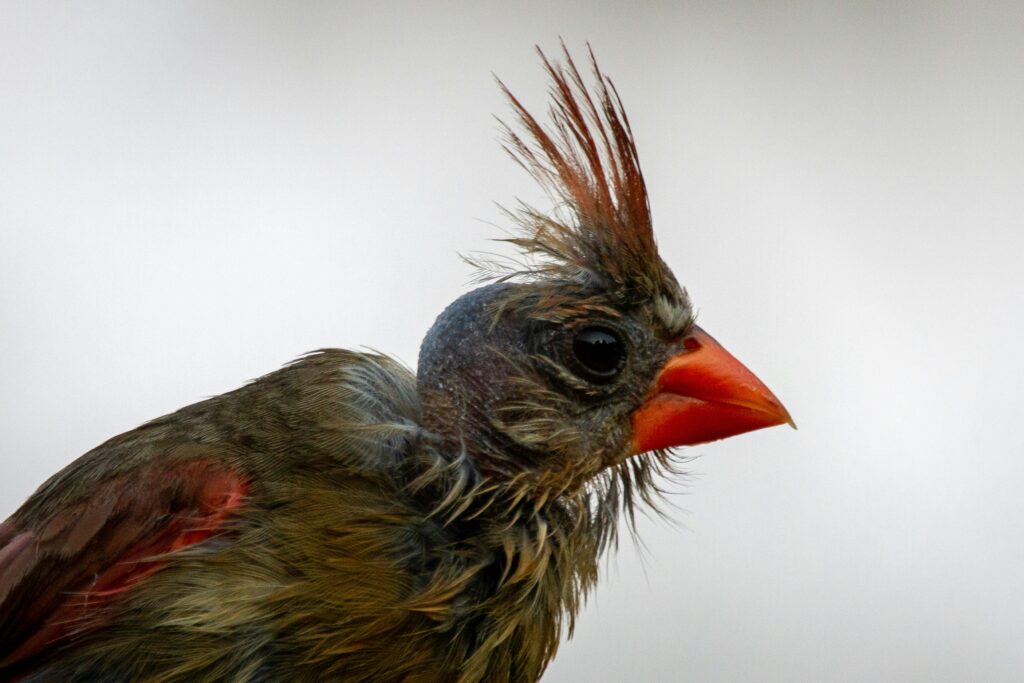
Northern Cardinals undergo a molt and replace their feathers annually when breeding season ends. Some may shed many of their head feathers at once and look temporarily silly with bald spots. However, if they lost many feathers outside of their normal molting season, it could be a sign of injury or associated with parasites.
Both male and female Northern Cardinals may attack their own reflections in windows or car mirrors during spring and early summer. They behave aggressively to defend their breeding territories from what could appear to be a rival bird. Northern Cardinals typically use a nest only once and then build a new one for a future nesting attempt.
Species name: Cardinalis cardinalis
Source: Audubon Society, Cornell Lab of Ornithology
Photo credit: Joshua J. Cotten on Unsplash