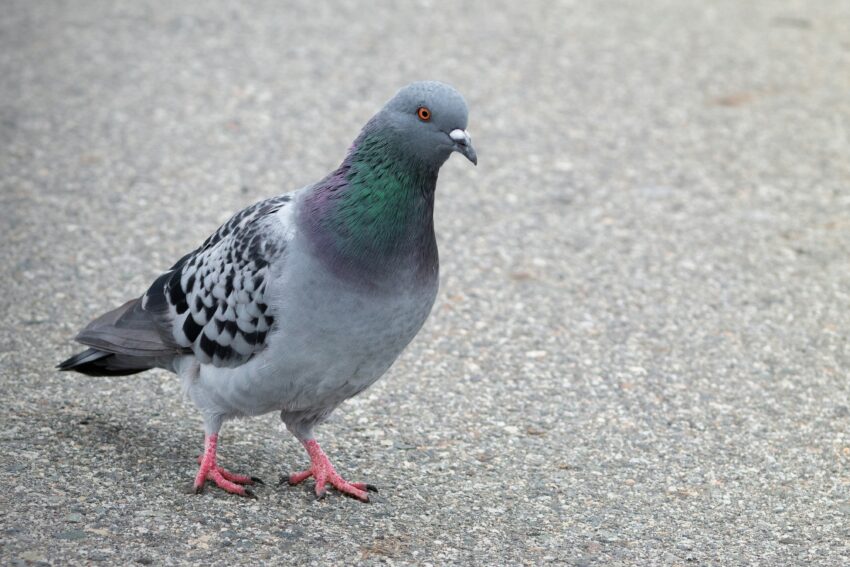
The Rock Pigeon has a long history of living alongside humans in urban spaces. Also known as the common city pigeon, they live around towns and can nest under human-made structures such as bridges and ledges. While easily recognized by their blue-gray plumage with black bars, their appearances can also vary widely in shape and color. Through selective breeding, so-called “fancy pigeons” possess more exotic features. The neighborhood pigeons of Nutley can predominantly be observed to be of the typical plumage variety.
Rock Pigeons happily forage for seeds as the majority of their diet, although they also accept food provided by humans, such as fruit. However, feeding free-roaming wild birds by scattering food is illegal in Nutley’s parks or Township property.
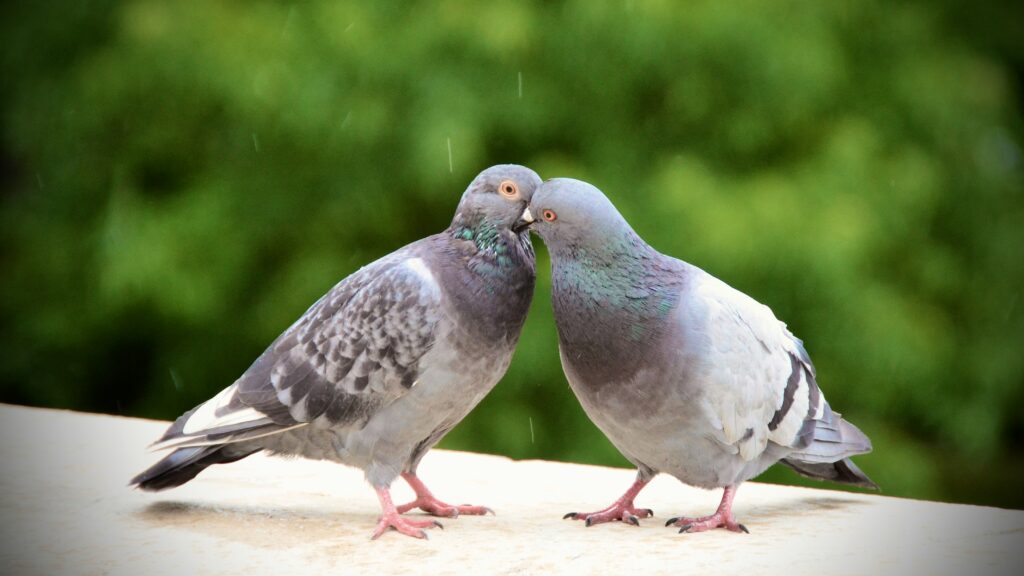
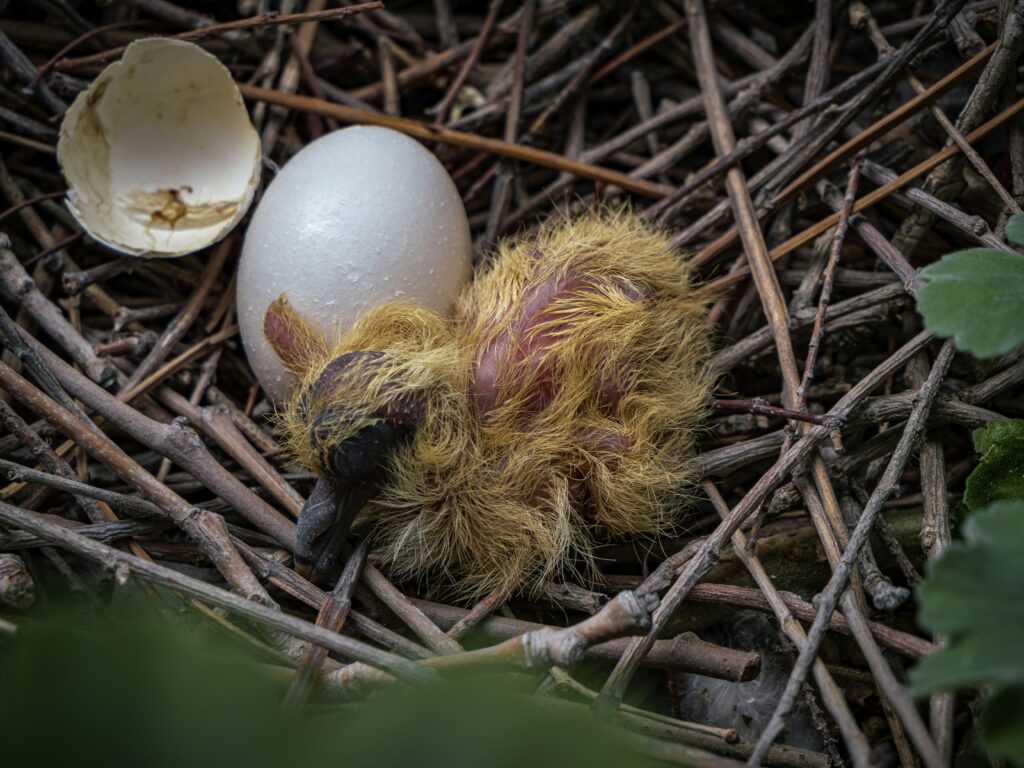
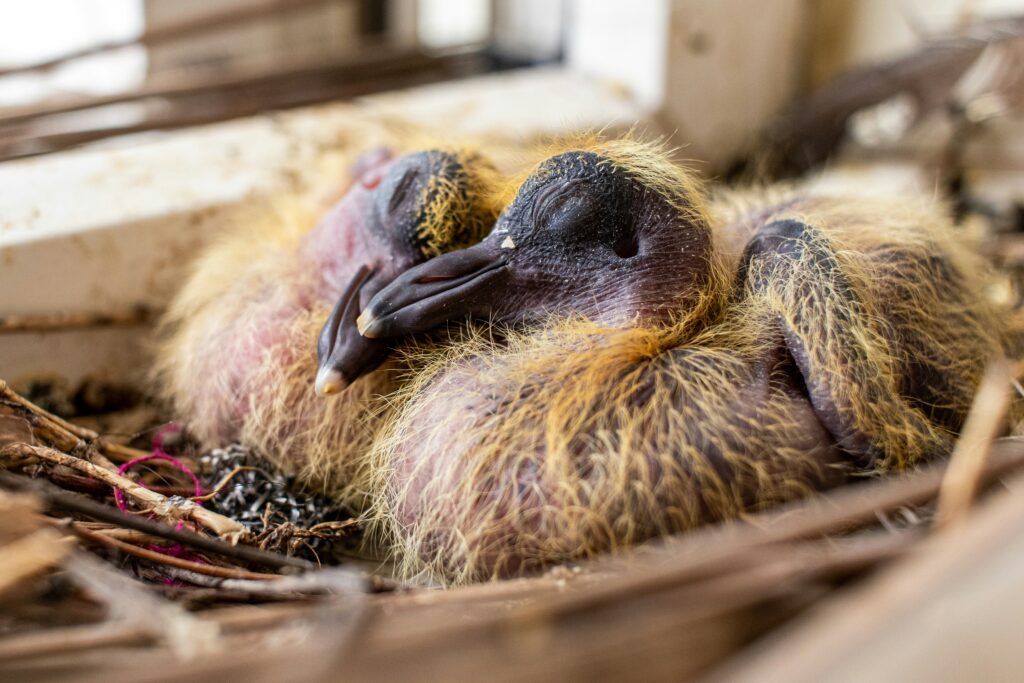
Rock Pigeons are non-migratory, so they are all-season residents that roost and parent their young birds in Nutley much like humans do. They generally form long-term pair bonds together. They often repeatedly return to their roosting locations to hatch their babies. Their egg clutches can contain between 1–3 eggs, and both parents incubate their eggs. They feed their young a secretion commonly called “pigeon milk” from their crops, an enlarged area of their esophaguses used to store food before it gets to their stomachs. Pigeon babies, also called “squabs”, are altricial, meaning they hatch with their eyes closed, relying on their parents for warmth, sparse yellow or white down.
Feral Rock Pigeons live about 2.4 years on average, while captive domestic pigeons can live longer. Owning a Rock Pigeon is legal in New Jersey without a state wildlife permit, while Nutley requires anyone keeping an animal such as a pigeon to provide them with humane care, veterinary treatment, weather protection if housed outdoors, and a sanitary living space.
Archeological writing evidence suggests that Rock Pigeons were domesticated more than 5,000 years ago in Mesopotamia and Egypt. Their proximity to modern humans is due in part to being brought to North America from Europe in the early 1600s, having been raised for food, racing, trained for homing, or carrying messages. Many of the pigeons that occupy human spaces are feral descendants from domesticated birds that escaped or were released, and structures such as buildings and ledges provide similar nesting conditions to their natural cliff-dwelling habitat.
They were used as homing pigeons using their natural homing ability for carrying messages. Messenger pigeons were commonly used by the U.S. Army Signal Corps in the 20th century for sending messages through 1957. Nutley’s modern pigeons are free to roam any way they please in the Memorial Parks alongside the monuments honoring Nutley’s veterans.
Species name: Columba livia
Sources: Cornell Lab of Ornithology, Cornell Lab Bird Academy, Audubon Society, National Library of Medicine, Township of Nutley
Photo credit: Joshua Ralph on Unsplash